
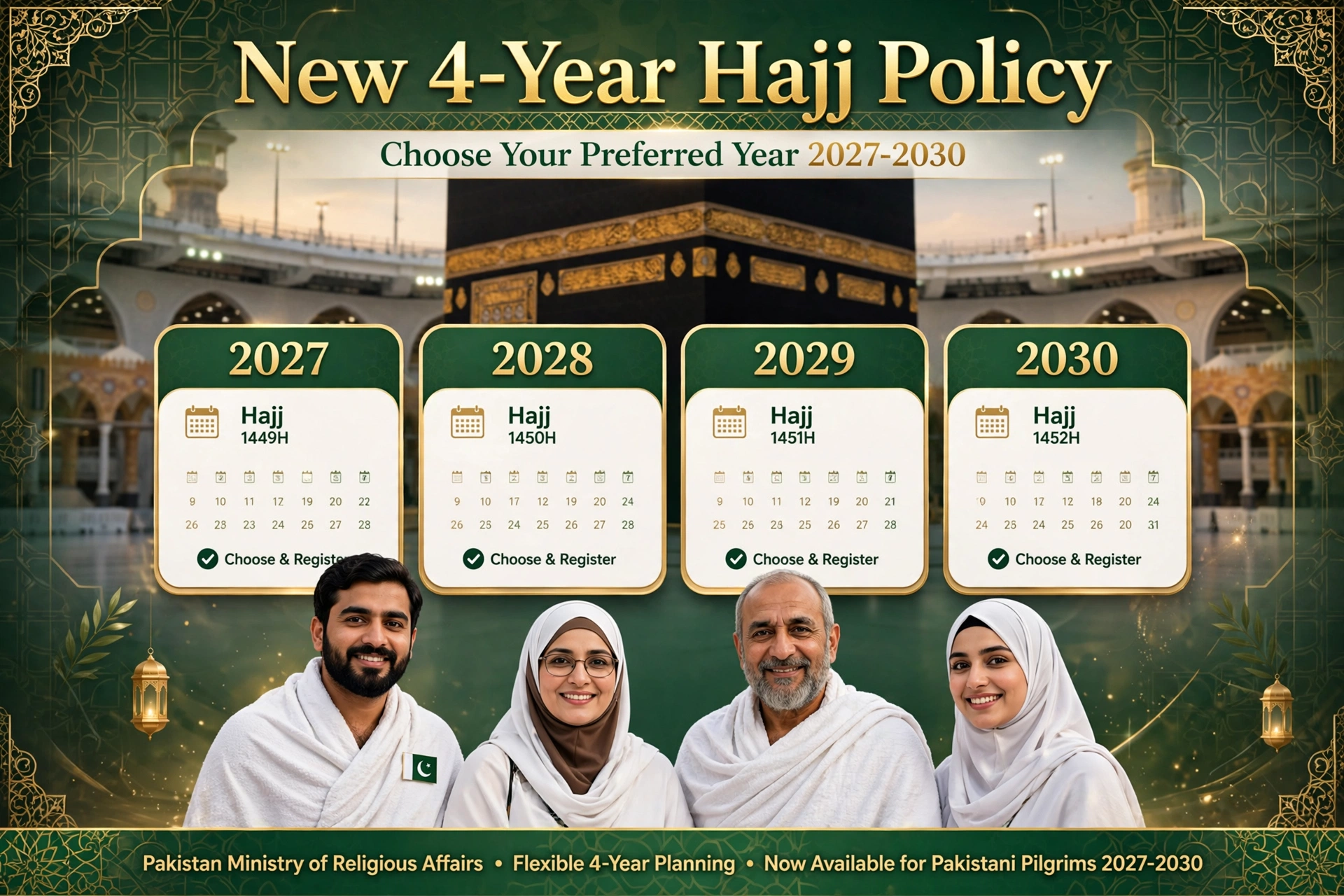
Pakistan has introduced its first-ever four-year Hajj Policy for 2027–2030, giving intending pilgrims greater flexibility in deciding when they want to perform the sacred journey. The new policy replaces the previous system in which Hajj arrangements were announced each year separately.
Under the new system, pilgrims can register in advance and select their preferred Hajj year between 2027 and 2030. This means applicants will no longer have to go through the registration process every year if they are planning to perform Hajj during this four-year period.
The government has introduced the system with a focus on greater transparency, digital management and improved facilities for pilgrims. A digital registration and waiting-list mechanism will help manage the growing number of people intending to perform Hajj.
Another important feature is the option to make an advance payment of around 10 percent of the estimated Hajj cost to secure registration. The government is also working on a Shariah-compliant savings scheme to help people plan and save for their pilgrimage over time.
The new policy also establishes a 60:40 quota arrangement between the government and private Hajj operators, creating a longer-term framework for organizing the pilgrimage.
Officials say the four-year framework is aimed at making Hajj arrangements more predictable, organized and convenient for Pakistani pilgrims. By allowing people to choose their preferred year in advance, the government hopes to reduce uncertainty and improve planning.
The policy marks a significant change in Pakistan’s Hajj administration and introduces a more digital and long-term approach to pilgrimage management through 2030.
