
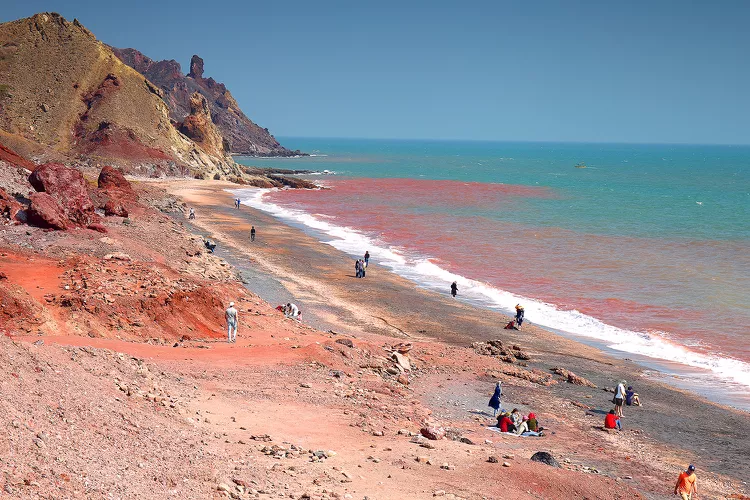
On December 16, 2025, the waters near Hormuz Island in southern Iran turned a striking red color following heavy rainfall that swept over the island. The unusual phenomenon was caused by the island’s distinctive red soil, which is rich in iron oxide and minerals, washing into the surrounding waters.
Hormuz Island, located in the Persian Gulf, is known for its unique geology and vibrant landscapes. The island’s red soil has long been a tourist attraction, creating colorful landscapes that contrast sharply with the blue waters of the Gulf. When heavy rains occur, the loose soil mixes with runoff and flows directly into the sea, temporarily turning the coastal waters a bright red hue.
Environmental experts note that this is a natural and seasonal occurrence, particularly after intense rainfall in areas with high concentrations of red soil. The phenomenon is not harmful to marine life, as the color change is temporary and caused primarily by sediment rather than pollutants or chemicals. Over time, ocean currents and tides disperse the soil, returning the water to its normal color.
The red waters near Hormuz Island have attracted attention on social media, with locals and tourists sharing videos and photos of the dramatic scene. Scientists also use such events to study sediment transport and erosion patterns, as well as the effects of heavy rainfall on coastal regions.
While visually stunning, authorities have reminded visitors that the phenomenon is temporary and encouraged tourists to continue exploring the island’s natural beauty, including its red cliffs, salt caves, and rich cultural heritage, making Hormuz a unique destination in Iran’s Persian Gulf region.
