
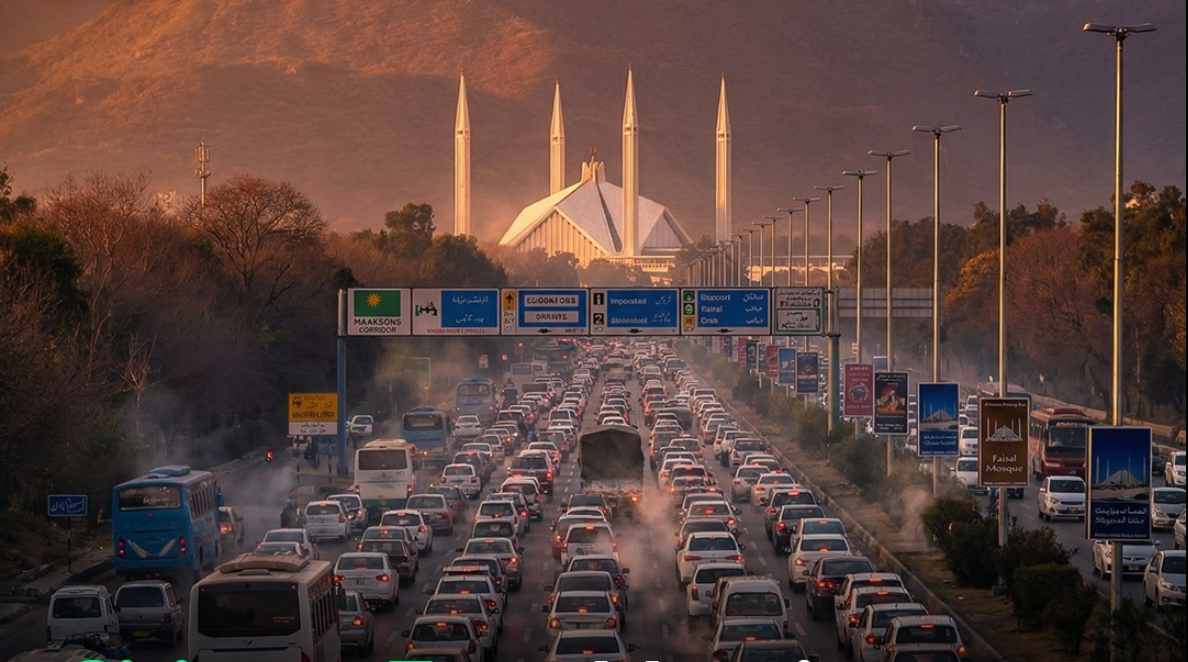
Commuters in Islamabad are increasingly facing severe traffic congestion on the Islamabad Expressway, despite it being one of the widest and most developed corridors in the capital. What was once promoted as a signal free and high speed route has now turned into a daily bottleneck, especially during peak office hours.
The expressway connects key areas of Islamabad with Rawalpindi and serves thousands of vehicles every day. Over the past decade, rapid urban expansion, new housing societies, and commercial developments along the corridor have significantly increased traffic volume. Experts point out that infrastructure growth has not kept pace with the rising number of private vehicles on the road.
Although several sections were expanded and interchanges were constructed to ease congestion, traffic flow remains disrupted. Bottlenecks near major entry and exit points, ongoing construction work, and lane indiscipline further slow movement. Minor accidents or vehicle breakdowns can quickly trigger long queues that stretch for kilometers.
Urban planners note that reliance on private cars, limited public transport options, and weak enforcement of traffic rules contribute to the worsening situation. Even wide roads struggle when vehicle numbers exceed planned capacity.
For residents, the daily commute now involves long delays, higher fuel consumption, and growing frustration. Many are calling for improved traffic management, better public transport integration, and stricter enforcement to restore smooth flow on one of the capital’s most critical routes.
