
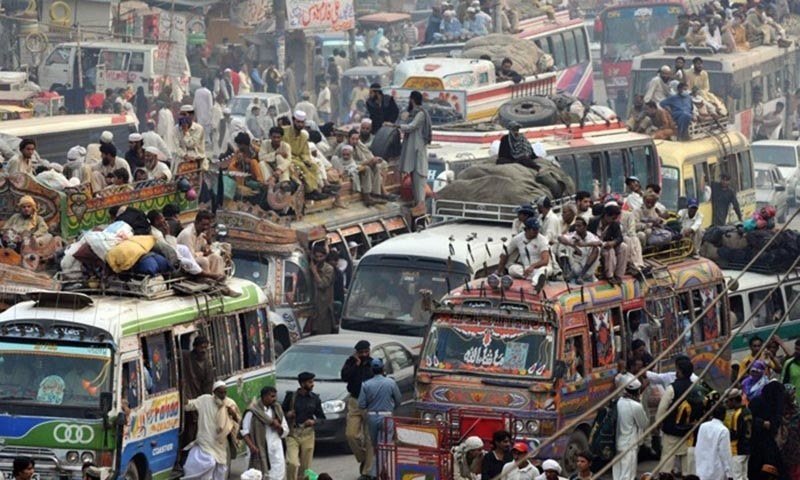
Public transport fares across Pakistan have surged by up to 65% following the sharp increase in petrol and diesel prices. The new fares took effect immediately after the government raised petrol to Rs458.40 per litre and diesel to Rs520.35 per litre on April 3, 2026.
Intercity bus operators have increased ticket prices significantly. For example, the fare from Lahore to Islamabad has jumped from Rs3,000 to Rs4,000. The fare from Lahore to Peshawar rose from Rs3,500 to Rs4,600. Travel from Lahore to Karachi has gone up from Rs8,600 to Rs12,000, while Lahore to Faisalabad increased from Rs1,350 to Rs2,350. Passengers on many long routes now face an extra burden of Rs1,000 to Rs2,500 per trip.
Local transport has also become costlier. Taxi, rickshaw, and ride-hailing services in cities like Rawalpindi, Lahore, and Karachi have raised charges by up to 35%. Daily commuters, especially low-income workers, students, and daily wagers who rely on buses and minibuses, are badly affected.
Transporters say the hike was unavoidable because of the massive rise in fuel costs and higher prices of spare parts. The Pakistan Goods Transporters Association announced similar increases for freight services, which will push up the prices of food and other goods.
Many people have expressed anger over the sudden jump in travel costs at a time when living expenses are already high. The government has announced some relief measures, including free public transport in Islamabad for 30 days and targeted subsidies for intercity transport and motorcyclists.
However, experts warn that frequent fare increases will add to inflation and make life harder for ordinary citizens. Commuters hope authorities will find ways to provide more affordable travel options soon.
