
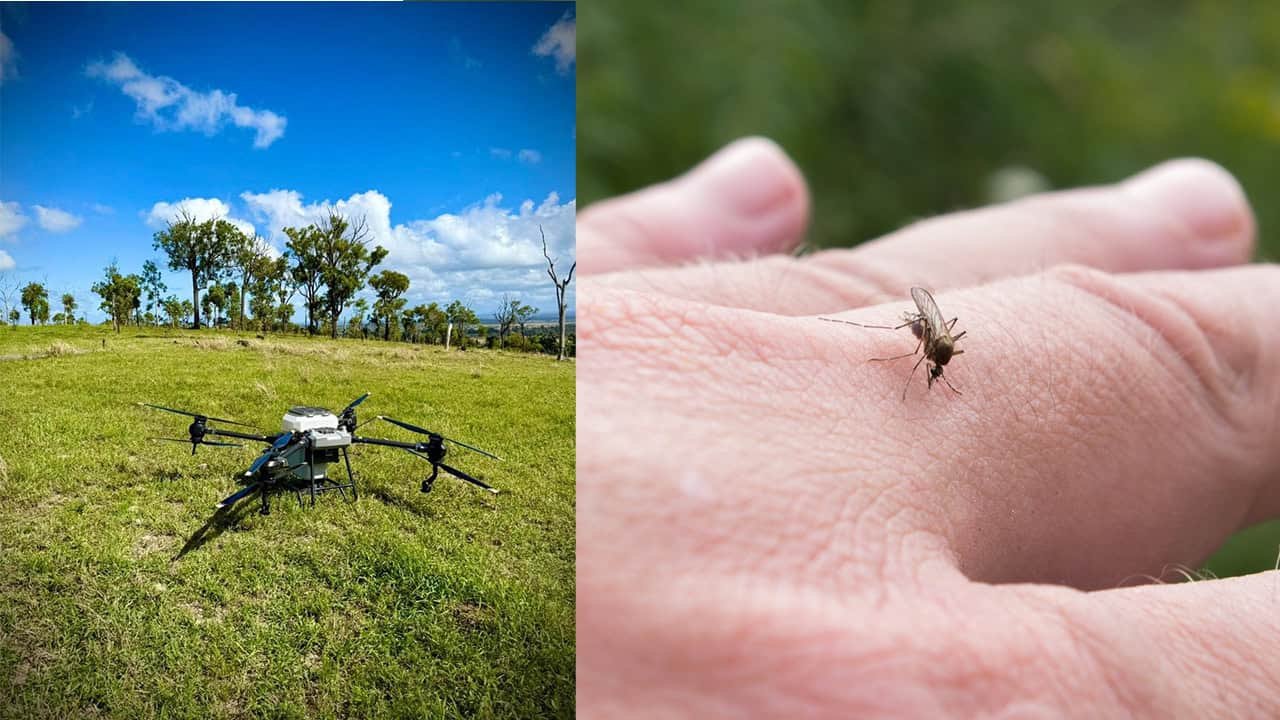
China has unveiled a tiny surveillance drone that closely resembles a mosquito, raising fresh discussions about the future of military reconnaissance and covert intelligence gathering.
Developed by researchers at the National University of Defence Technology, the micro-drone measures between 1.3 and 2 centimeters and weighs only 0.3 grams, making it one of the smallest drones ever publicly revealed.
Unlike conventional drones that rely on propellers, this insect-like device uses flapping wings to fly, hover, and even perch on surfaces. Its design allows it to move quietly and enter tight or enclosed spaces where larger drones cannot operate. This makes it especially suitable for discreet surveillance missions in urban or indoor environments.
The mosquito-style drone is equipped with miniature sensors that can collect intelligence. It can reportedly be controlled through a smartphone interface, allowing operators to guide it with precision during close-range missions.
Researchers say the drone is intended mainly for covert military surveillance, where stealth and size are more important than speed or long-range capability.
Despite its advanced design, the drone has several limitations. Its battery life is very short, and its operational range is limited, restricting its use to nearby targets. Due to these constraints, experts believe the technology is best suited for specialized reconnaissance rather than continuous monitoring.
At present, the mosquito drone remains a laboratory prototype and has not been deployed in real-world operations. However, its development highlights rapid advances in micro-robotics and surveillance technology, raising important questions about future warfare, privacy, and the ethical use of such highly discreet monitoring tools.
