
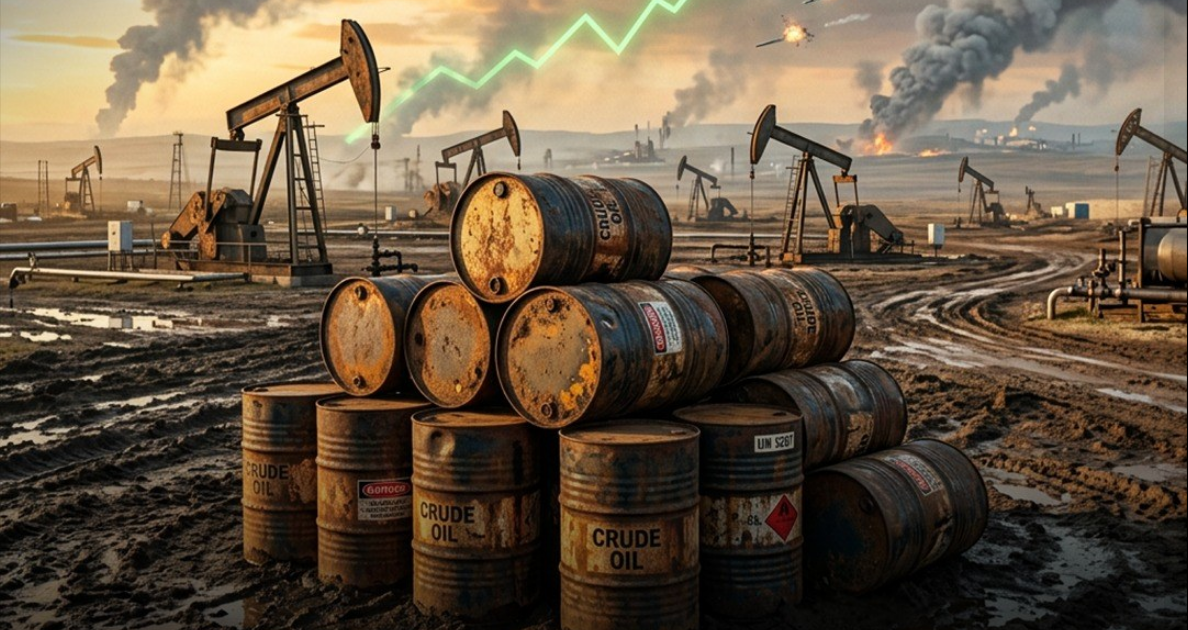
Rising tensions in the Middle East are putting pressure on global oil markets, with analysts warning that prices could reach as high as $180 per barrel. Reports from The Wall Street Journal suggest that the ongoing conflict involving Iran is already affecting oil supply in the region.
One major concern is the Strait of Hormuz, a key route through which nearly 20% of the world’s oil is transported. Any disruption or blockage in this narrow passage can quickly impact global supply. If the situation worsens and the route remains restricted, experts believe prices could even move close to $200 per barrel.
So far, oil prices have already increased by almost 50% this year. This sharp rise is linked to supply concerns, investor fears, and uncertainty about how long the conflict may continue. Countries that rely heavily on oil imports are likely to face higher costs, which can lead to increased fuel prices and inflation.
Energy experts say that long-term instability in the region could create serious challenges for global markets. Governments and international organizations are now focusing on keeping supply routes open and stable. Efforts are being made to reduce risks and ensure safe movement of oil shipments.
If tensions continue, the impact will not be limited to oil-producing countries. It could affect economies worldwide, making energy more expensive for businesses and everyday consumers.
