
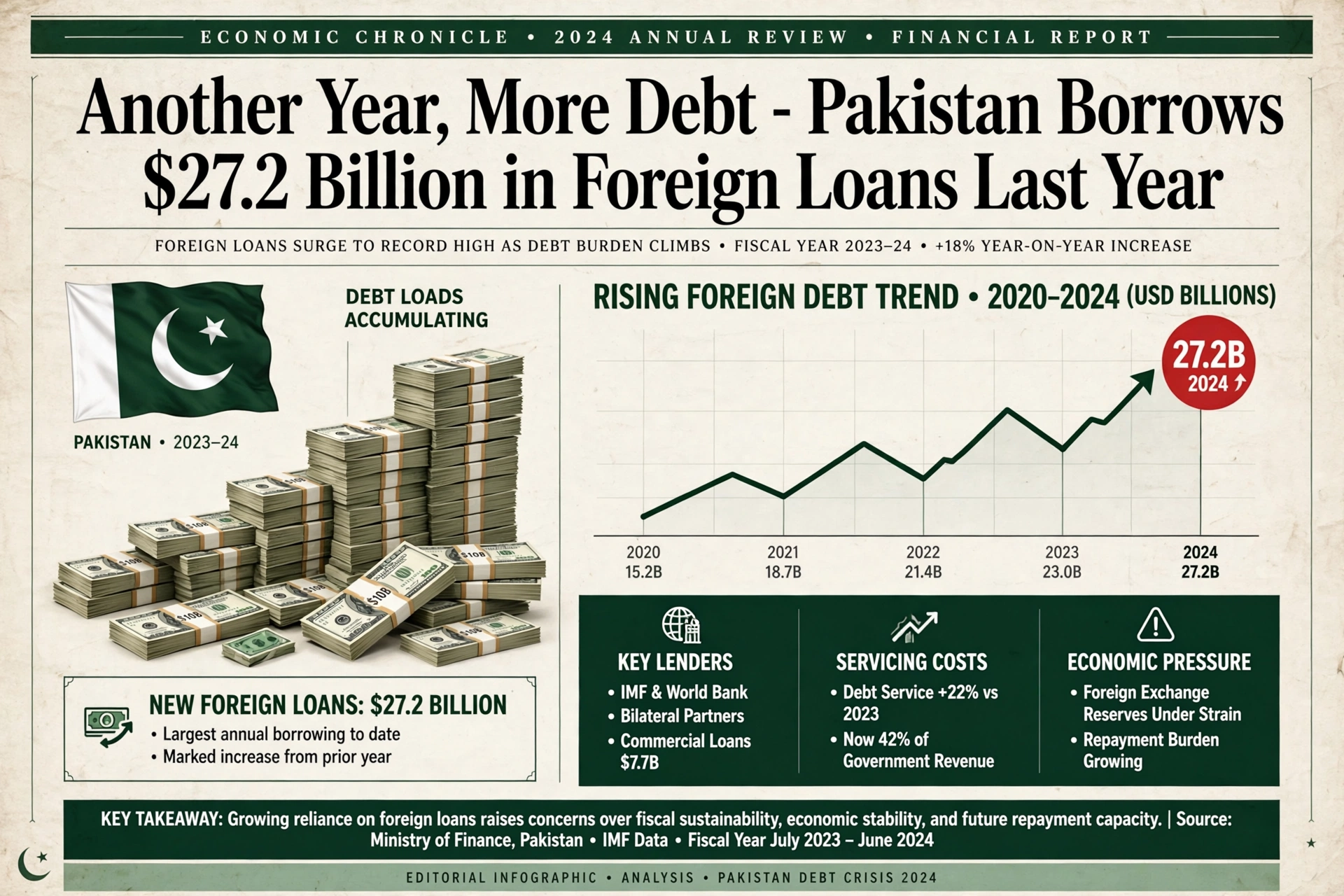
Pakistan borrowed approximately $27.2 billion in foreign loans during the last financial year, highlighting the country’s continued reliance on external financing to meet its economic and development needs.
The latest borrowing figure reflects the financial challenges faced by the country as Pakistan continues to manage high external debt, repayment obligations and pressure on its foreign exchange reserves. The government has relied on loans and other external financing sources to support the balance of payments, fund development projects and meet immediate financial requirements.
The borrowing came from a range of sources, including multilateral financial institutions, bilateral partners, commercial lenders and international markets. Such financing plays an important role in supporting Pakistan’s economy, but it also increases the country’s future repayment responsibilities.
Pakistan has been working to strengthen its economy through economic reforms, fiscal measures and efforts to increase foreign exchange earnings. However, the country’s heavy debt burden remains a major challenge for policymakers.
The government faces the difficult task of balancing its need for external financing with the long-term objective of reducing dependence on borrowing. Higher debt servicing costs can place additional pressure on government finances and limit the funds available for public services and development.
The latest borrowing figure has renewed discussions about Pakistan’s economic sustainability and the need to improve tax collection, exports, investment and domestic revenue generation.
Experts have repeatedly emphasized that sustainable economic growth will require stronger domestic resources and greater foreign investment rather than continued dependence on loans.
With billions of dollars borrowed in just one year, Pakistan’s latest figures underline the scale of the country’s financial challenges and the importance of policies aimed at reducing debt dependence while strengthening economic stability.
