
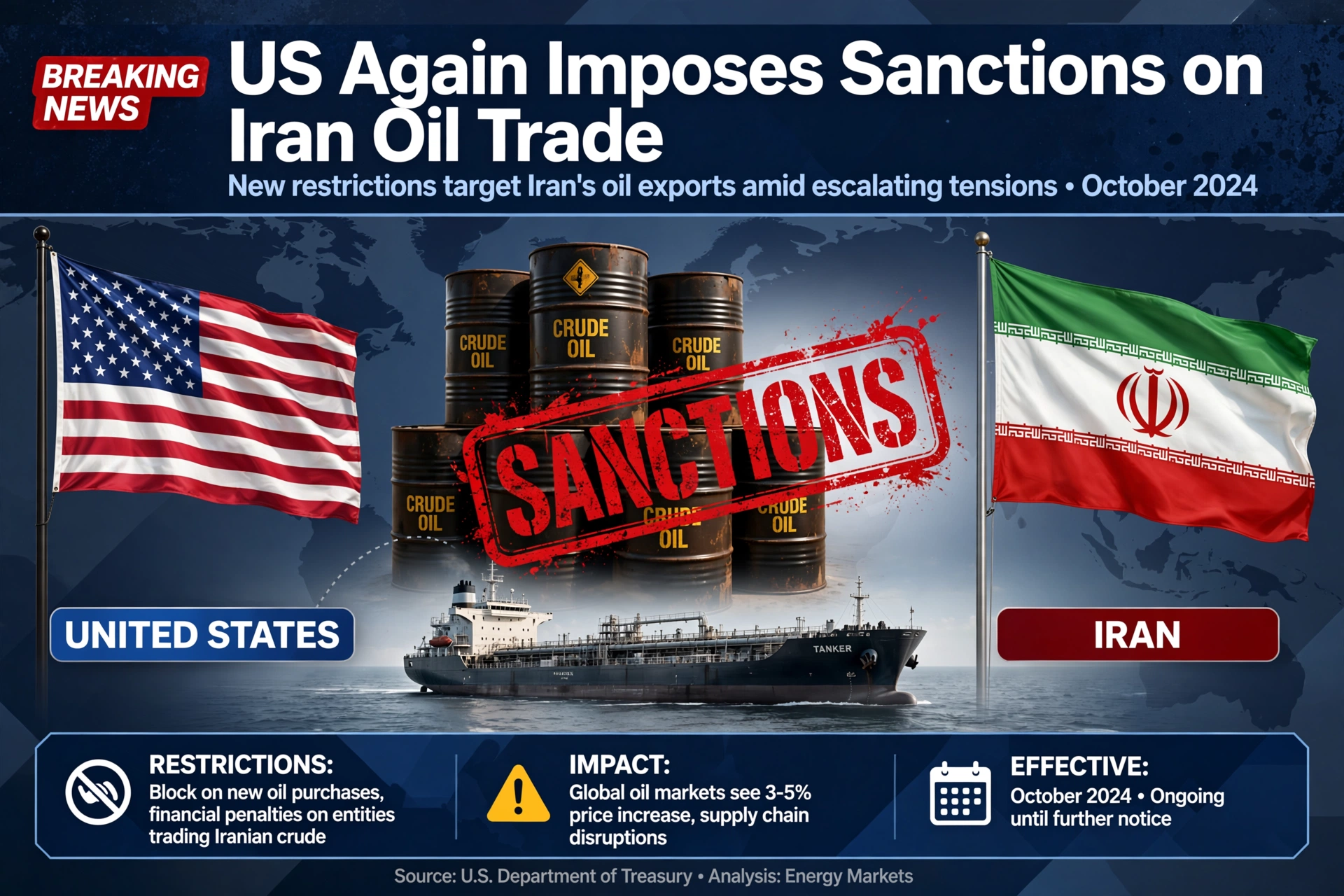
The United States has reimposed sanctions on Iran’s oil trade, reversing a temporary sanctions waiver that had allowed limited Iranian oil sales. The decision follows a series of attacks on commercial oil and liquefied natural gas (LNG) tankers near the Strait of Hormuz, a critical global shipping route.
According to the U.S. Treasury Department, the sanctions waiver, which was originally scheduled to remain in effect until August, will now expire much earlier. The move effectively restores restrictions on Iranian crude oil exports as Washington accuses Tehran of threatening international maritime security.
U.S. officials allege that the recent tanker attacks were carried out by forces linked to Iran, although Tehran has not publicly accepted responsibility for the incidents. The attacks have heightened concerns over the safety of shipping through the Strait of Hormuz, a passage that handles a significant share of the world’s oil exports.
The renewed sanctions are expected to have immediate economic consequences. Global oil prices jumped sharply after the announcement, with traders fearing potential disruptions to energy supplies if tensions in the Gulf continue to escalate. Analysts say uncertainty surrounding future Iranian oil exports could keep energy markets volatile in the coming weeks.
The latest action also places additional strain on diplomatic efforts between Washington and Tehran. Recent negotiations aimed at easing tensions and discussing Iran’s nuclear program had led to limited sanctions relief, but the new measures signal a significant setback in those talks.
The United States has stated that the sanctions are intended to protect global shipping and hold Iran accountable for actions that threaten regional stability. Meanwhile, international observers are closely monitoring developments, as further escalation could have far-reaching consequences for global energy markets and Middle East security.
