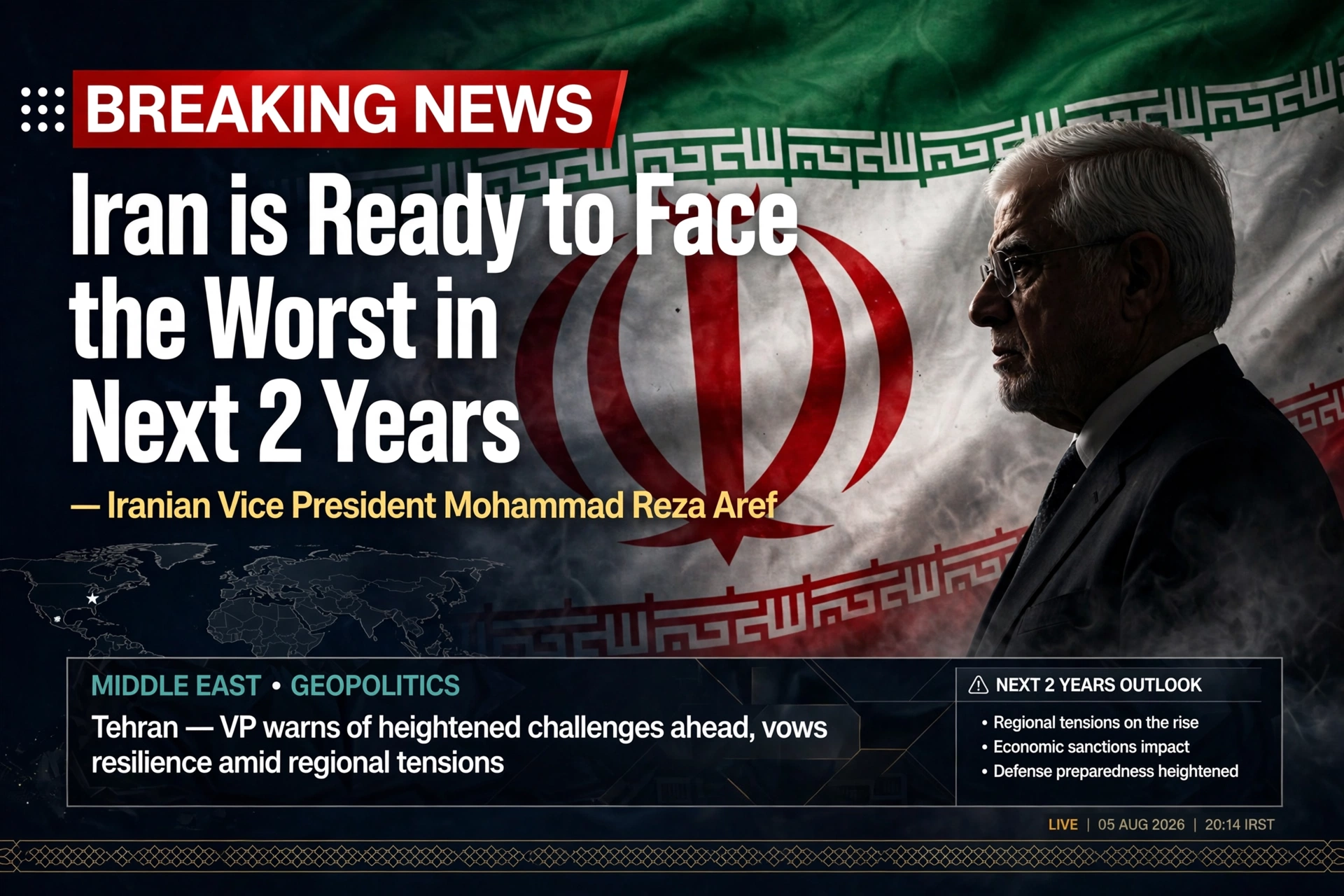
Iran is preparing for potentially difficult conditions over the next two years, with First Vice President Mohammad Reza Aref saying the government has made plans to deal with even the worst possible scenarios.
Speaking amid continuing tensions and conflict in the region, Aref said Iran’s government had prepared its plans for the next two years “even for the worst conditions.” His remarks were reported by Iranian media on August 1.
Aref said the country had continued to function despite significant pressure and wartime conditions. He also emphasized that the government had managed to maintain supplies and prevent shortages of essential goods.
The comments come as Iran continues to face serious economic and security challenges amid its confrontation with the United States and Israel. The conflict has also created wider concerns over regional stability, energy supplies and shipping through the Strait of Hormuz.
Iran’s preparation for a two-year period suggests that officials are expecting prolonged uncertainty rather than relying on a quick resolution to the current crisis. The government has reportedly been preparing supplies and making arrangements to ensure the country can continue operating under difficult circumstances.
Aref’s statement also comes as diplomatic efforts remain uncertain. While negotiations and ceasefire discussions have taken place, major disagreements between Iran and the United States remain unresolved.
The Iranian government has repeatedly stressed its ability to withstand external pressure. Aref’s latest remarks reinforce that message, indicating that Tehran is preparing its economy and administration to operate even if difficult conditions continue for an extended period.
The statement highlights the uncertainty surrounding the region, where military tensions, sanctions, energy security and the future of the Strait of Hormuz remain closely connected.
For Iran, the next two years could therefore become a crucial period as authorities attempt to maintain domestic stability while dealing with continuing geopolitical and economic pressure.
