
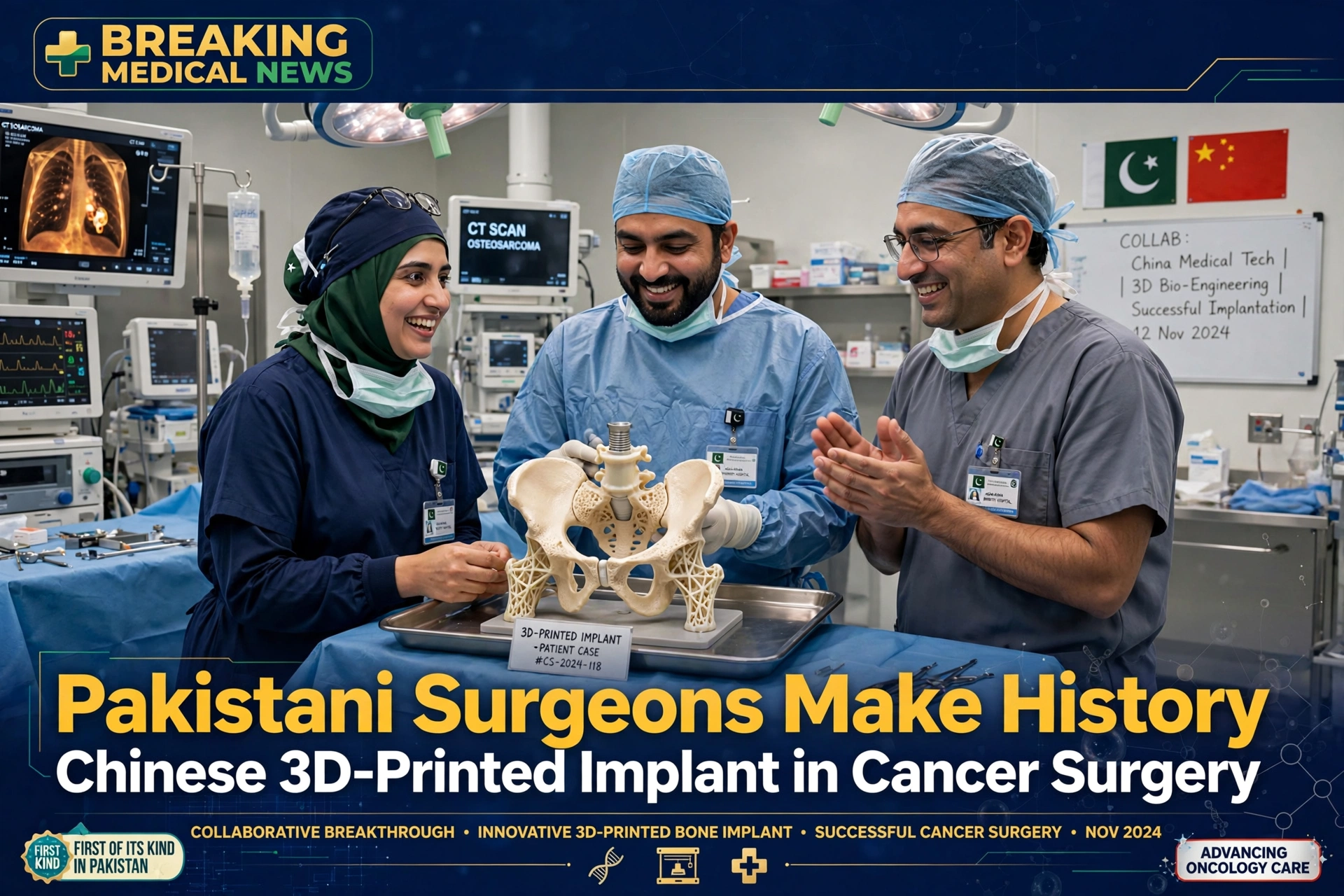
Pakistani surgeons have achieved a major medical milestone by using a Chinese 3D-printed implant during a complex cancer surgery, highlighting the growing use of advanced technology in the country’s healthcare sector.
The innovative procedure involved the use of a customized implant produced through 3D-printing technology, allowing doctors to address the patient’s specific anatomical requirements more precisely. Such technology can help surgeons develop implants tailored to individual patients, potentially improving the accuracy and effectiveness of complex reconstructive procedures.
The successful surgery marks an important step in the adoption of advanced medical solutions in Pakistan. It also demonstrates how international medical collaboration and modern manufacturing technologies can contribute to the treatment of complicated cases that require highly specialized surgical intervention.
3D printing is increasingly being explored in healthcare because it allows medical teams to create patient-specific models, surgical guides and implants. By using detailed anatomical information, specialists can plan procedures more accurately and develop solutions suited to the unique structure of an individual patient.
The achievement also reflects the expertise of Pakistani medical professionals and their growing ability to incorporate emerging technologies into sophisticated surgical procedures. For patients undergoing cancer treatment, reconstructive surgery can be particularly challenging when the disease or treatment has resulted in significant tissue or bone loss.
The successful use of the Chinese-made implant could encourage further adoption of similar technologies in Pakistan’s hospitals and specialized medical centres.
Experts believe developments of this kind could open new possibilities for patients requiring highly customized reconstructive treatment. They may also strengthen Pakistan’s position in advanced healthcare by encouraging greater cooperation between local medical specialists and international technology providers.
The milestone represents another step toward more personalized surgery, where modern technology can be combined with specialist medical expertise to deliver treatment designed around the individual needs of each patient.
