
Islamabad saw tense scenes on Sunday after news of the reported killing of Iran’s Supreme Leader Ayatollah Ali Khamenei in strikes launched by United States and Israeli forces.
Protesters in the federal capital tried to organise marches and express their anger, but authorities moved quickly to control public spaces.
The district administration imposed Section 144 of the Criminal Procedure Code, banning all kinds of public meetings, demonstrations, rallies, and protests across the city. Officials said the step was taken because some groups had announced plans to march towards central areas, including the Red Zone, where foreign embassies and government buildings are located.
The police warned that any gathering of four or more people would be unlawful and that strict legal action would follow for anyone who violated the order.
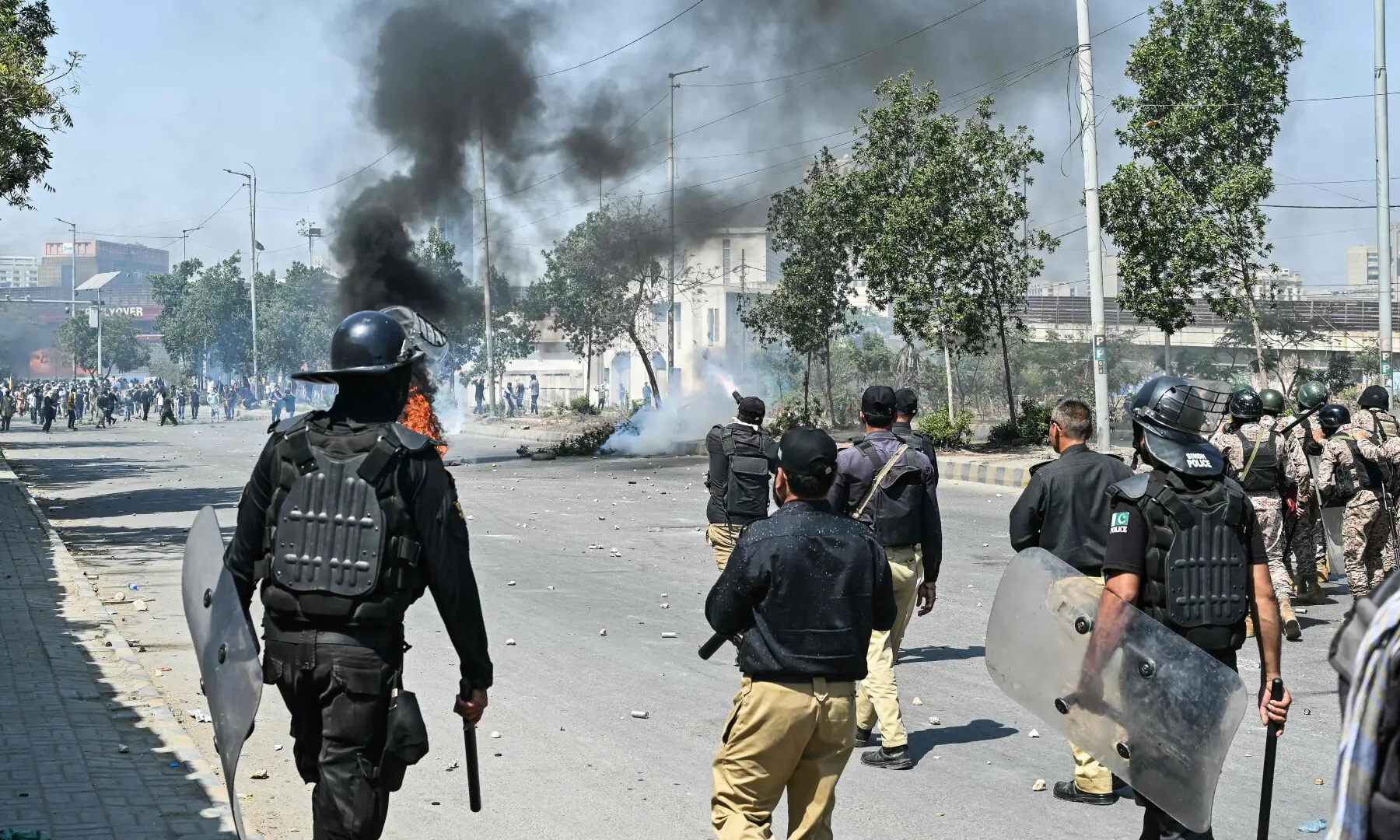
Despite this ban, several hundred people gathered near Serena Chowk in Islamabad in the afternoon to protest. Law enforcement officers set up containers and roadblocks to stop them from moving further into the diplomatic zone.
There were clashes as some protesters tried to push past these barriers. Police used crowd-control measures including baton charges and teargas in an effort to disperse the crowds.
Similar protests took place in other cities such as Karachi and Lahore, where some demonstrations near U.S. Consulate buildings turned violent, resulting in deaths and injuries. This unrest has put additional pressure on security forces in Pakistan as they try to maintain peace and order.
Authorities in Islamabad said Section 144 would stay in force until the situation calms down, and they again urged people not to join any protest or large gathering. The government said it wants to prevent wider violence and protect the lives of citizens and foreign missions in the capital.
