
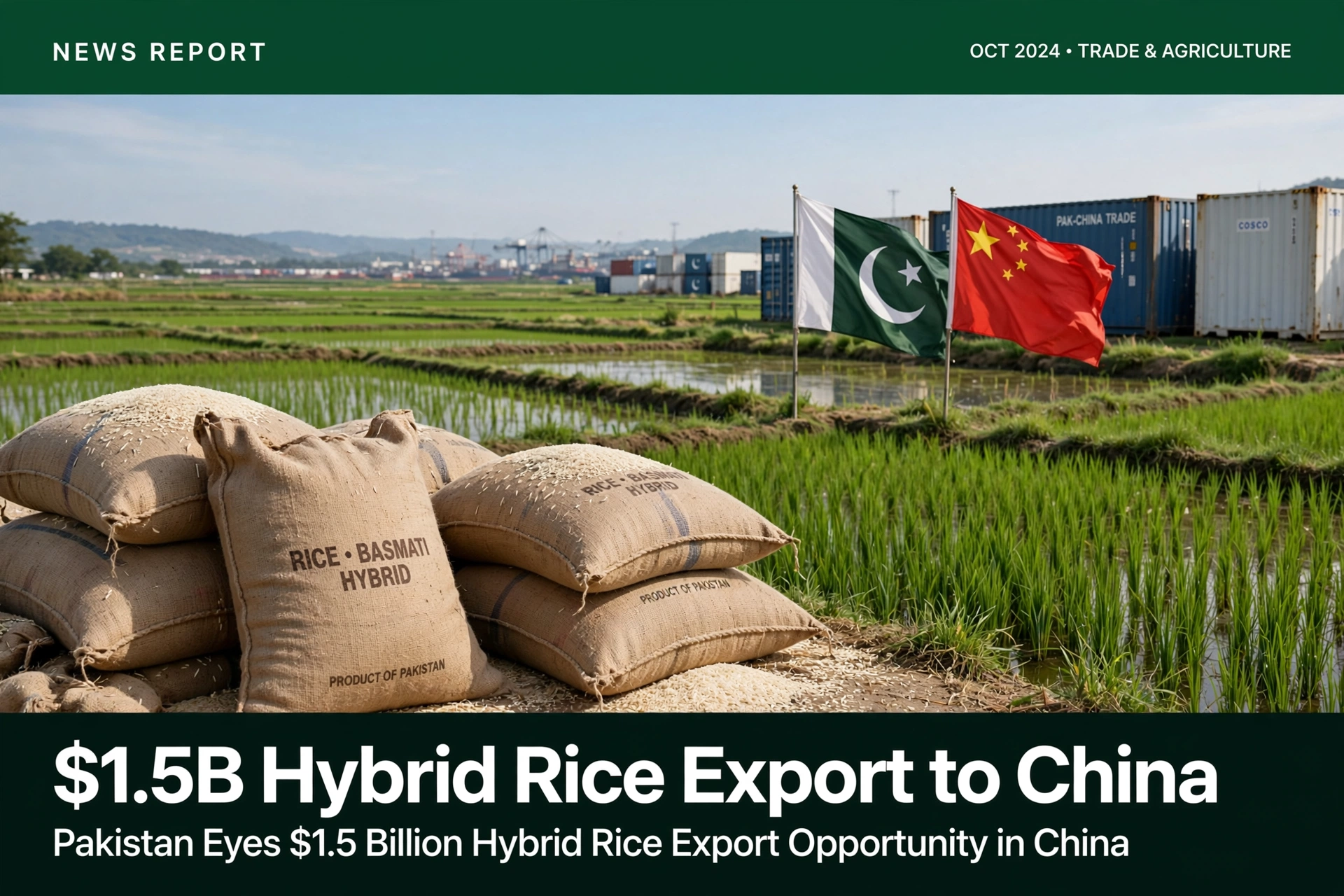
Pakistan is looking to tap into a potentially lucrative opportunity in China’s rice market, with hybrid rice exports estimated to have the potential to generate up to $1.5 billion.
The opportunity could provide a major boost to Pakistan’s agricultural exports and strengthen the country’s position in the international rice market. China, one of the world’s largest food markets, offers significant potential for Pakistani rice producers and exporters if the country can meet the required quality and food-safety standards.
Expanding hybrid rice exports could also create opportunities across Pakistan’s agricultural supply chain. Rising demand would encourage greater investment in high-quality seeds, contract farming, modern cultivation techniques and processing facilities. Farmers could benefit from improved production practices and stronger links with exporters and international buyers.
However, successfully entering and expanding in the Chinese market will require consistent quality and compliance with international standards. Pakistan may need to strengthen certification systems, traceability, food safety and quality control to ensure its rice meets Chinese import requirements.
Closer cooperation between the government and private sector could play an important role in turning this potential into actual export growth. Support for farmers, improved research and development, better post-harvest handling and stronger market connections could help Pakistani exporters compete more effectively.
If managed strategically, hybrid rice could emerge as an important contributor to Pakistan’s agricultural export earnings. The opportunity could not only generate valuable foreign exchange but also deepen Pakistan-China trade relations and open new avenues for the country’s agriculture sector.
