
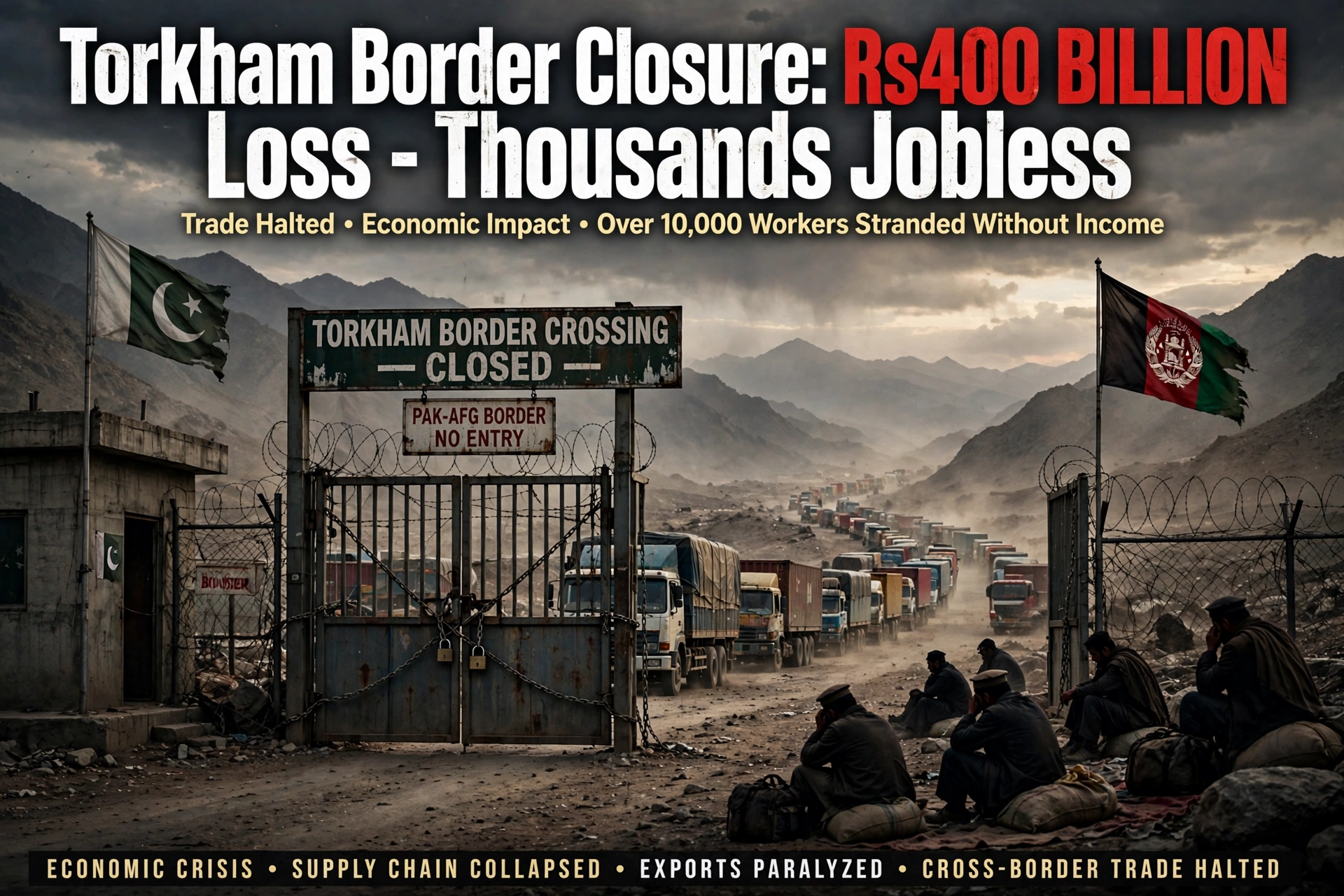
The prolonged closure of the Torkham border between Pakistan and Afghanistan has caused major economic losses, disrupted cross-border trade, and left thousands of workers without employment.
The border crossing is a key trade route connecting Pakistan with Afghanistan and facilitating the movement of goods to Central Asian markets. Its closure has affected traders, transporters, exporters, importers, and businesses that depend on regular cross-border movement.
Losses reportedly reaching Rs400 billion have raised concerns about the wider impact on Pakistan’s economy. The disruption has slowed the transportation of essential commodities, increased costs for businesses, and created uncertainty for traders on both sides of the border.
Truck drivers, loaders, warehouse workers, customs clearing agents, and daily-wage labourers are among those facing the consequences. Many depend on the movement of cargo through Torkham for their daily income. With commercial activities disrupted, thousands of people have reportedly been left without work or are struggling to earn enough to support their families.
The closure has also affected the movement of perishable goods, raising concerns about spoilage, delayed deliveries, and financial losses for exporters. Businesses dealing in agricultural products and other time-sensitive commodities are particularly vulnerable to prolonged delays.
Traders and business representatives have called for the restoration of normal border operations to reduce further losses and protect livelihoods. They have also stressed the importance of resolving outstanding issues through dialogue between Pakistan and Afghanistan.
The situation highlights the importance of stable border relations for regional trade, employment, and economic activity. A prolonged disruption could place additional pressure on businesses already facing rising operating costs.
Restoring trade flows and providing greater certainty for transporters and exporters would help revive commercial activity and support workers whose livelihoods depend on cross-border trade.
