
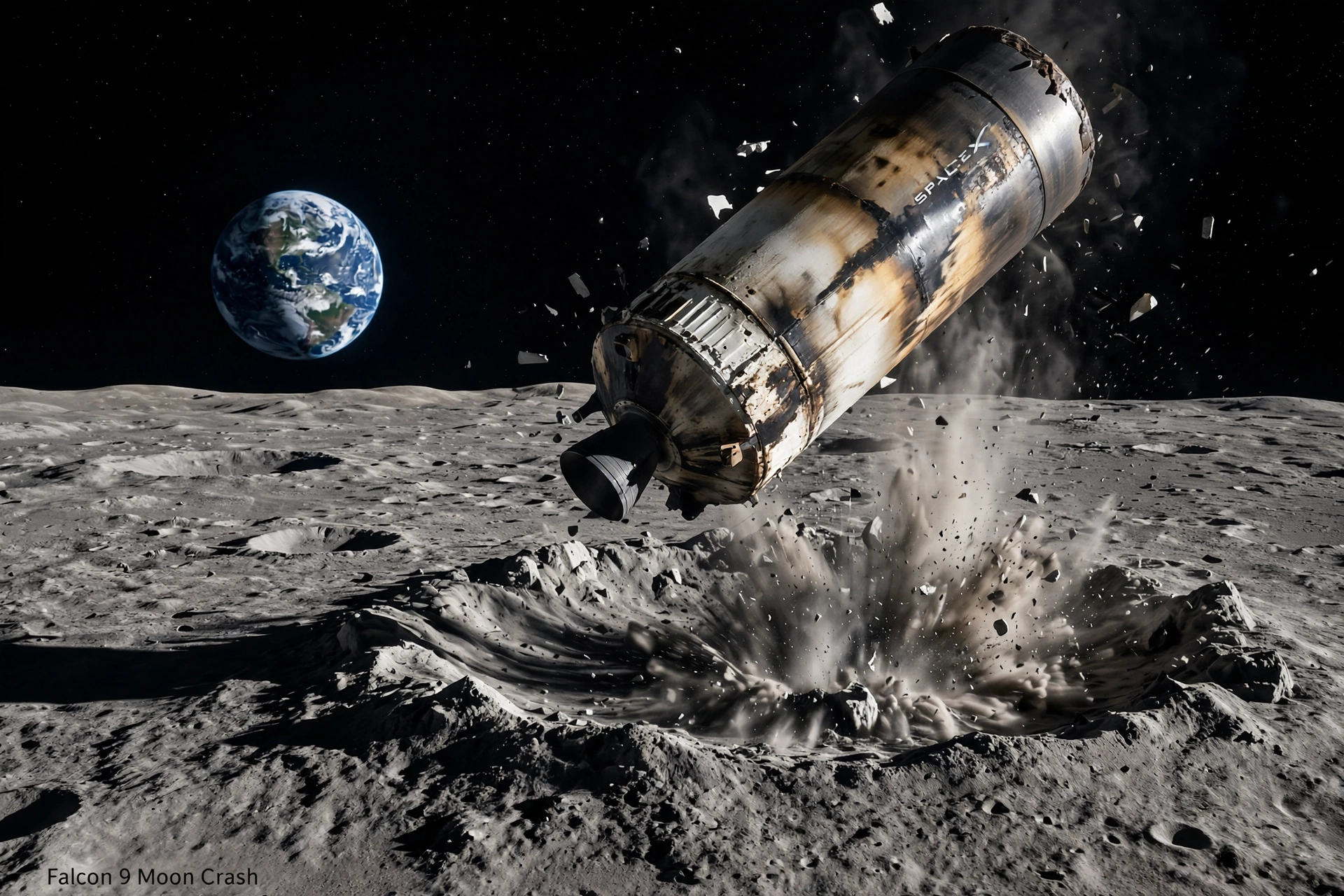
A spent SpaceX Falcon 9 upper stage weighing around 3.9 tonnes is expected to slam into the Moon on August 5, creating a rare opportunity for astronomers to study a human-made impact on the lunar surface.
The rocket stage, identified as 2025-010D, was launched in January 2025 as part of the mission that carried Firefly Aerospace’s Blue Ghost lunar lander and Japan’s Hakuto-R mission toward the Moon. After completing its role, the upper stage remained in space and was gradually placed on a trajectory that is now expected to end with a lunar collision.
Researchers estimate that the stage will hit the Moon at approximately 2.43 kilometres per second, or about 8,700 kilometres per hour, near the Einstein Crater. The predicted impact time is around 06:34–06:35 UTC on August 5.
The collision is expected to create a new crater and send a large plume of lunar dust and debris into space. Scientists believe the event could provide valuable information about how artificial objects interact with the Moon’s surface and how impact ejecta behaves in the lunar environment.
Unlike a rocket returning to Earth, the Falcon 9 stage will encounter no atmosphere before reaching the lunar surface, allowing it to strike the Moon at high speed. The impact poses no known danger to Earth, but researchers are keen to observe the event using telescopes and other instruments.
The unusual collision also highlights growing concerns about space debris management as lunar missions become increasingly frequent.
For scientists, however, the accidental crash could become a valuable natural laboratory—turning a discarded rocket stage into an unexpected experiment on the Moon.
