
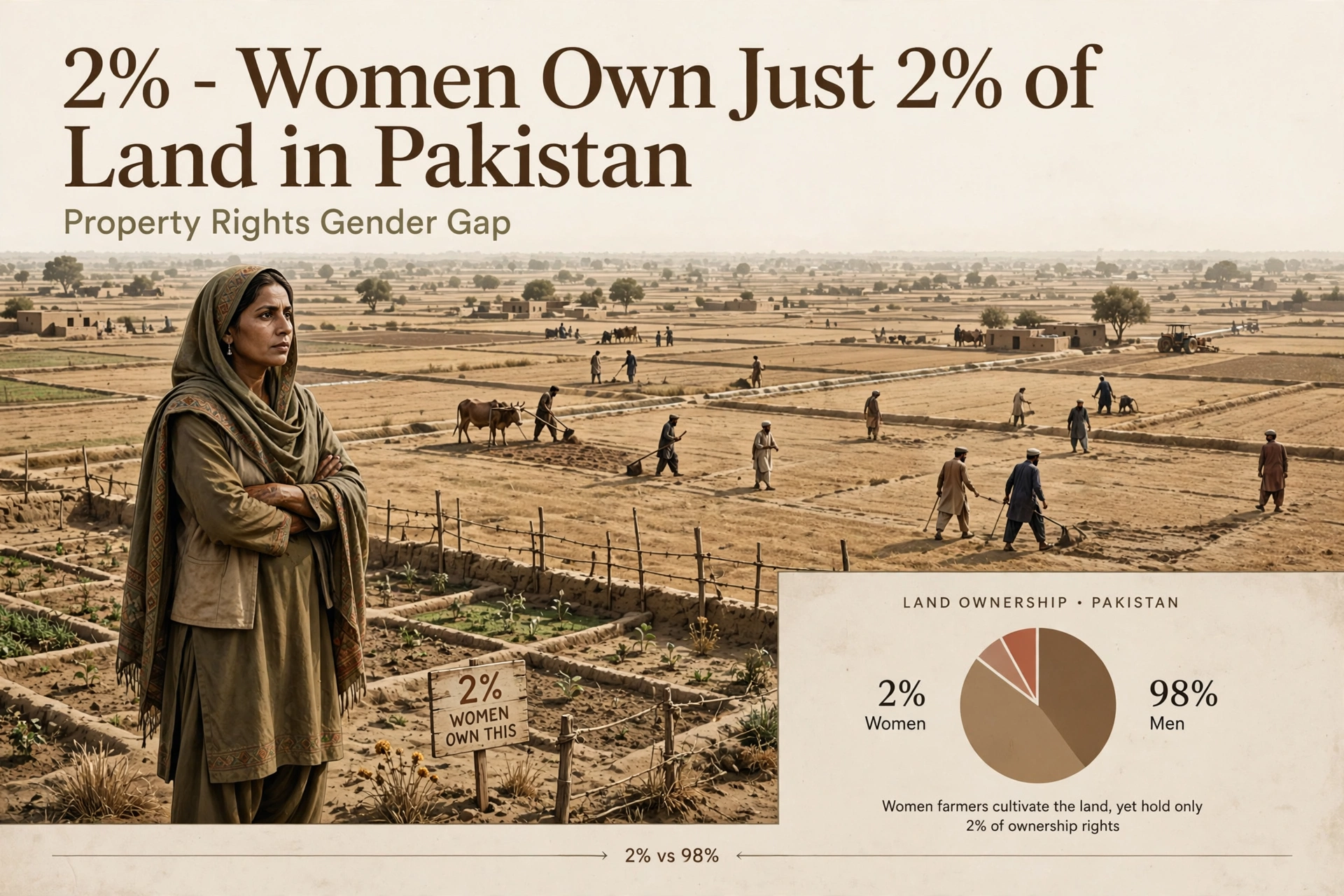
Women in Pakistan continue to face a major disadvantage when it comes to land ownership, with only around 2% of women reported to own land, highlighting a persistent gender gap in property rights. The figure is particularly striking because women play a significant role in Pakistan’s agricultural economy. A 2025 analysis by the International Growth Centre noted that around 70% of working women in rural Pakistan are engaged in agriculture, yet only about 2% own land.
The lack of land ownership can have serious economic and social consequences. Property provides financial security, access to credit and greater independence, while women without assets can remain economically dependent on their families.
Pakistan’s legal framework recognizes women’s rights to own and inherit property. The Ministry of Human Rights states that women have the right to inherit their share of property, while research has also highlighted that customary practices often prevent women from fully exercising these legal rights.
The problem is particularly visible in inheritance. According to Transparency International, data from Pakistan’s 2017–18 Demographic and Health Survey indicated that 97% of women had not inherited land or a house.
Experts argue that improving women’s access to land requires stronger implementation of existing laws, better land-record systems and greater awareness of inheritance rights.
The figures underline a wider challenge: legal rights alone are not enough unless women can effectively claim, register and control the property they are entitled to inherit or acquire.
