
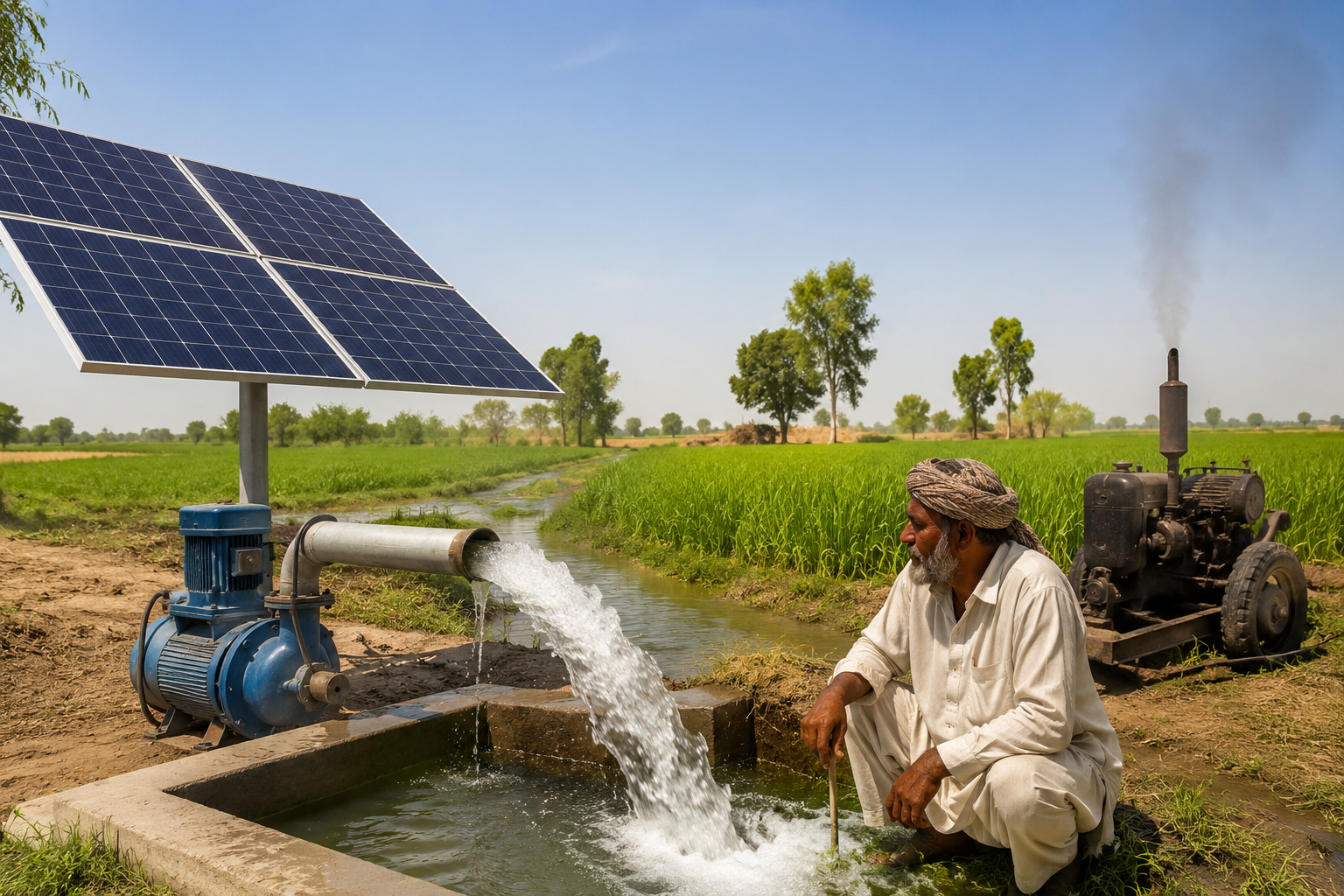
Pakistan’s agricultural sector is witnessing a major energy transformation as solar power has surpassed diesel to become the country’s largest source of electricity for farming and irrigation. The shift reflects the growing adoption of renewable energy by farmers seeking lower operating costs and greater energy independence.
According to recent findings, the number of diesel-powered tube wells has fallen by 36 percent, marking one of the most significant changes in Pakistan’s irrigation landscape in recent years. Rising diesel prices, frequent fuel shortages, and the availability of affordable solar technology have encouraged farmers to invest in solar-powered pumping systems.
Solar tube wells are helping farmers reduce irrigation costs while ensuring a more reliable water supply. Unlike diesel pumps, solar systems require minimal maintenance and do not rely on fluctuating fuel prices. This has made them particularly attractive for farmers in rural areas, where access to affordable energy remains a challenge.
The transition is also delivering environmental benefits. Greater use of solar energy is reducing greenhouse gas emissions and lowering dependence on imported fossil fuels. Experts believe this trend will contribute to Pakistan’s long-term energy security while supporting climate-friendly agricultural practices.
Government incentives, declining solar panel prices, and improved financing options have accelerated the shift toward renewable energy. Many farmers now view solar installations as a long-term investment that can significantly reduce production expenses and improve profitability over time.
Despite the positive momentum, challenges remain. High upfront installation costs, limited technical support in some regions, and the need for better financing mechanisms continue to affect wider adoption. Addressing these issues will be crucial to sustaining the transition.
The rapid replacement of diesel with solar power marks a turning point for Pakistan’s agriculture sector. As more farmers embrace clean energy solutions, the country is moving toward a more sustainable, cost-effective, and resilient farming system that can strengthen food production while reducing environmental impact and dependence on conventional fuels.
