
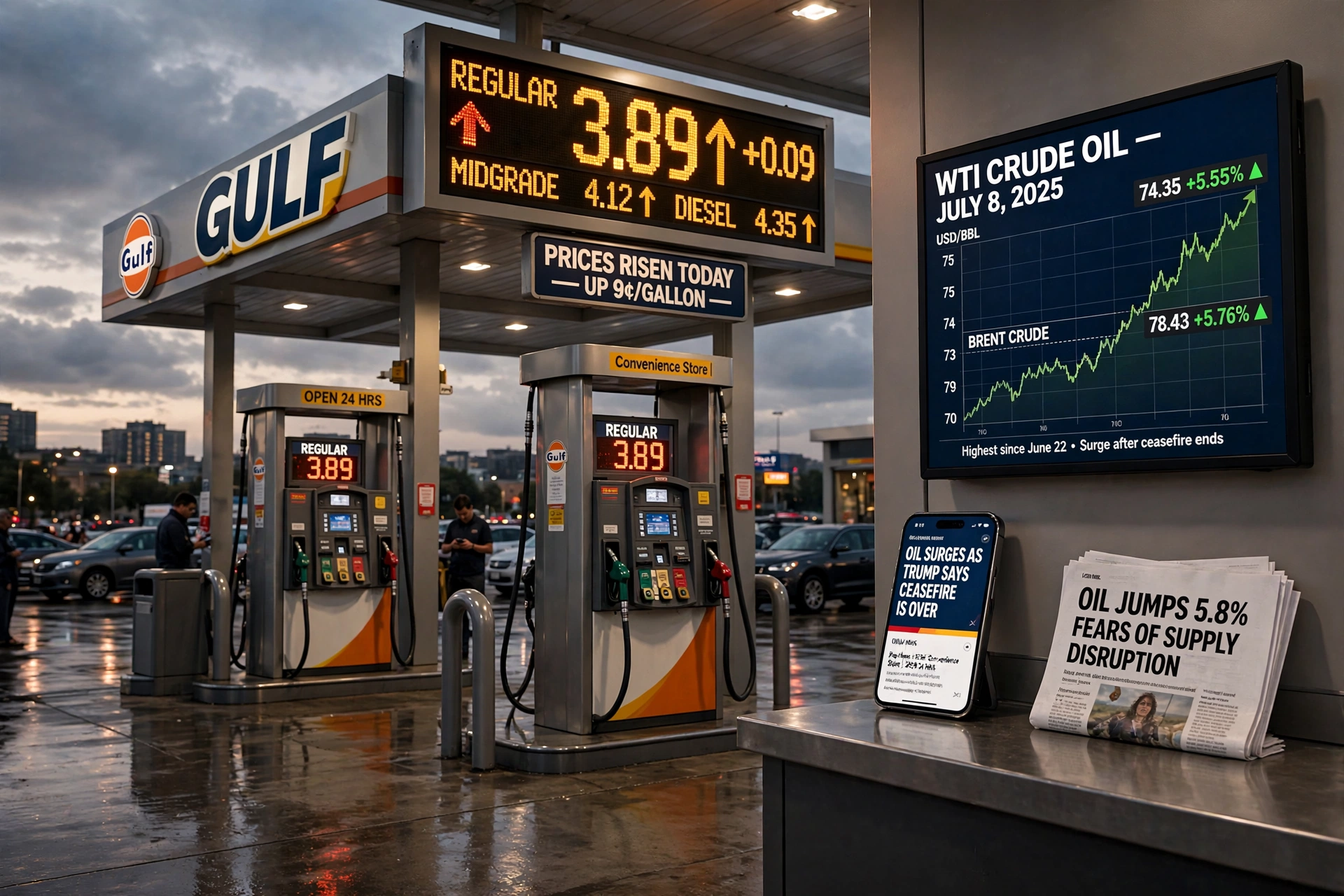
Pakistanis may soon face another increase in fuel prices after global oil markets reacted sharply to renewed tensions in the Middle East. International crude oil prices climbed significantly after U.S. President Donald Trump declared the ceasefire with Iran was “over,” raising fears of fresh disruptions to global energy supplies.
The announcement triggered an immediate response in international markets, with Brent crude rising above $78 per barrel and U.S. benchmark West Texas Intermediate also recording strong gains. Investors grew concerned that escalating conflict could disrupt shipping through the Strait of Hormuz, one of the world’s most important routes for oil exports.
For Pakistan, higher international oil prices could translate into another increase in petrol and diesel prices during the next fuel price review. As the country relies heavily on imported petroleum products, fluctuations in global crude prices have a direct impact on local fuel costs, transportation expenses, and inflation.
Analysts say continued uncertainty in the Middle East is likely to keep oil markets volatile. Any prolonged disruption in regional oil supplies or shipping routes could push crude prices even higher, placing additional pressure on oil-importing countries such as Pakistan.
Consumers and businesses are closely watching the situation, as another fuel price hike could increase the cost of transportation, electricity generation, and everyday goods. Rising fuel prices often have a ripple effect across the economy, affecting household budgets and business operating costs.
While no official increase in Pakistan’s petrol prices has been announced yet, developments in global oil markets will play a key role in determining the government’s next pricing decision. Authorities are expected to monitor international crude prices before announcing the next revision in domestic fuel rates.
