
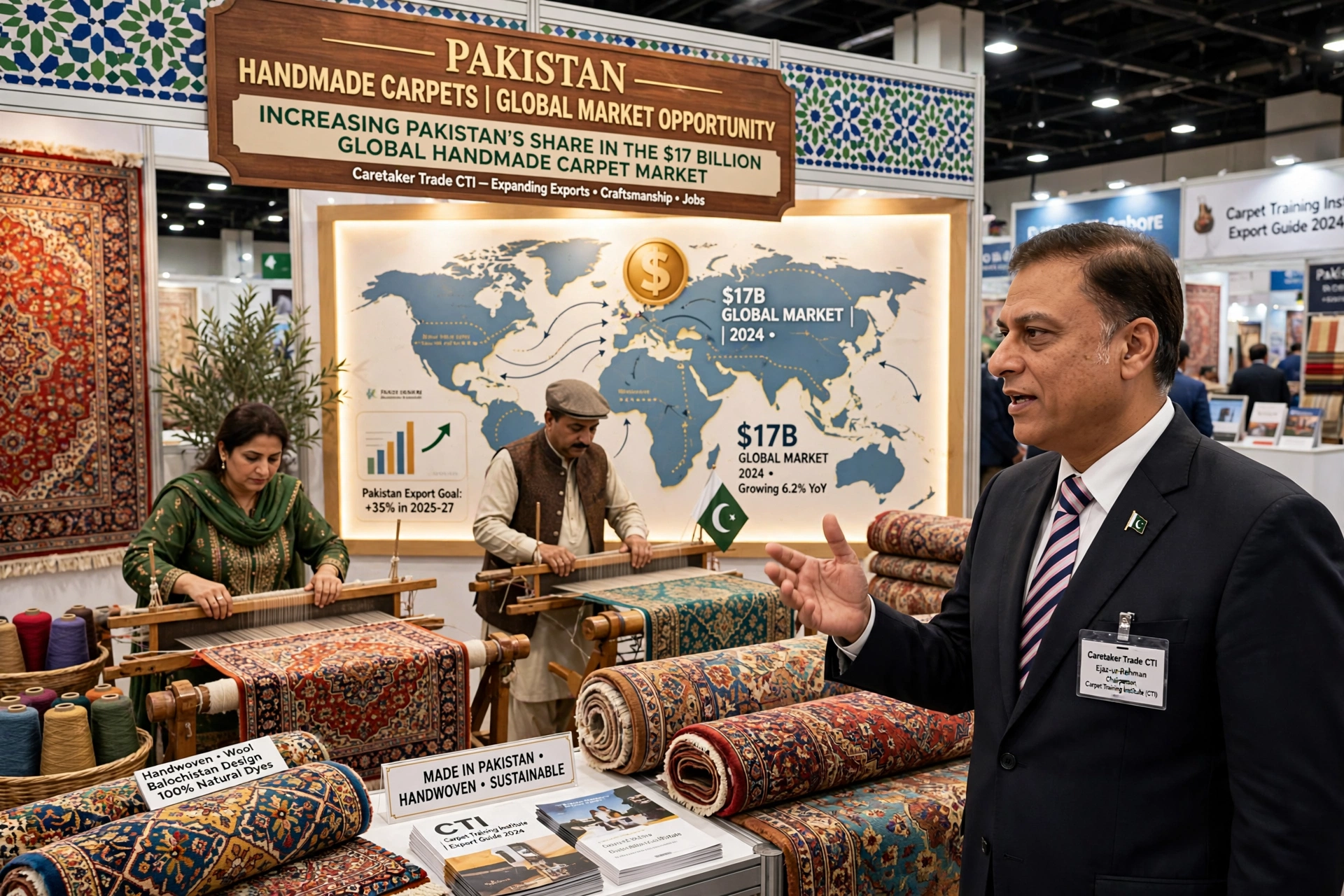
Pakistan’s handmade carpet industry is looking to strengthen its position in international markets as industry leaders push for stronger government backing, improved policies and a more targeted export strategy.
Carpet Training Institute Chairman Ejaz-ur-Rehman said Pakistan has significant room to expand its presence in the global handmade carpet market, which is valued at more than $17 billion. He emphasized that coordinated government and industry efforts could help local manufacturers compete more effectively with major carpet-producing countries.
A major opportunity is expected to come from the 42nd International Carpet Exhibition, scheduled to take place in Lahore from October 6 to 8, 2026. The event is expected to bring international buyers together with Pakistani manufacturers and exporters, creating opportunities for new business agreements and export orders.
The three-day exhibition will serve as more than a product showcase. Organizers plan to facilitate business-to-business meetings, allowing local exporters to establish direct relationships with overseas buyers. More than 80 foreign buyers are expected to participate, potentially opening doors to new markets and commercial partnerships.
Industry representatives also see the exhibition as an opportunity to understand changing international preferences. Feedback from foreign buyers can help Pakistani producers improve designs, product quality and production methods according to evolving global demand.
Experts believe Pakistan’s traditional craftsmanship remains a major strength, but the industry needs to combine this heritage with modern production techniques, innovative product development and stronger international marketing. Better branding and greater exposure to overseas markets could also help Pakistani carpets compete on quality and value rather than relying solely on their traditional appeal.
Government support will remain important in this process. Easier export procedures, effective trade promotion and stronger institutional coordination could help manufacturers reach international customers more efficiently.
With the upcoming exhibition bringing buyers and exporters together, Pakistan has an opportunity to turn its centuries-old carpet-making skills into greater export earnings. A focused strategy combining craftsmanship, modern business practices and international market access could help the country capture a larger share of the rapidly evolving global handmade carpet trade.
