
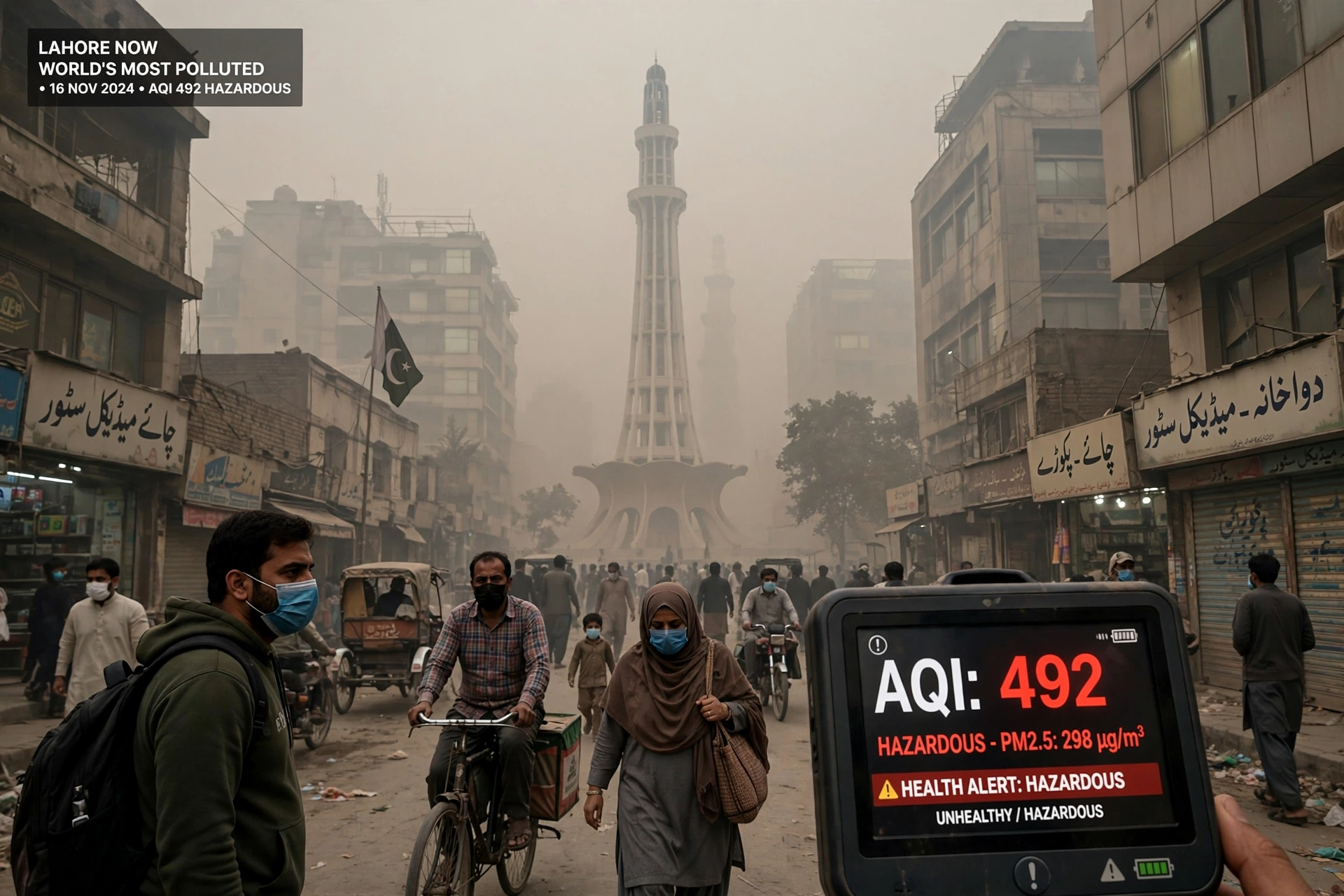
Lahore has emerged as the world’s most polluted major city as air quality deteriorated sharply, raising concerns about health and safety.
According to a report published on September 25, 2026, Lahore recorded an Air Quality Index (AQI) of 194, placing it at the top of the global pollution ranking at that time. The reading was classified as unhealthy, with fine particulate matter among the major pollutants affecting the city’s air.
The worsening air quality has added to Lahore’s long-running pollution problem. Traffic emissions, industrial activity, construction dust, waste burning and other sources contribute to harmful particles in the atmosphere. Weather conditions can also trap pollutants close to the ground, making breathing conditions worse.
Pakistan’s Punjab Environmental Protection Agency also reported unhealthy air across several areas of Lahore. Its monitoring network recorded an overall AQI of 155 at 10pm on September 25, with some locations reporting higher levels. Kahna Nau recorded an AQI of 183, while Safari Park reached 178.
Health experts generally warn that polluted air can particularly affect children, older people and those with existing respiratory or heart problems. Exposure to high levels of fine particles may cause breathing difficulties and other health concerns.
Residents are advised to reduce unnecessary outdoor activity when pollution levels are high and take precautions when spending time outside. People with respiratory conditions may need extra care during periods of poor air quality.
Lahore’s ranking highlights the continuing need for measures to control emissions, improve air monitoring and reduce pollution sources across the city.
