
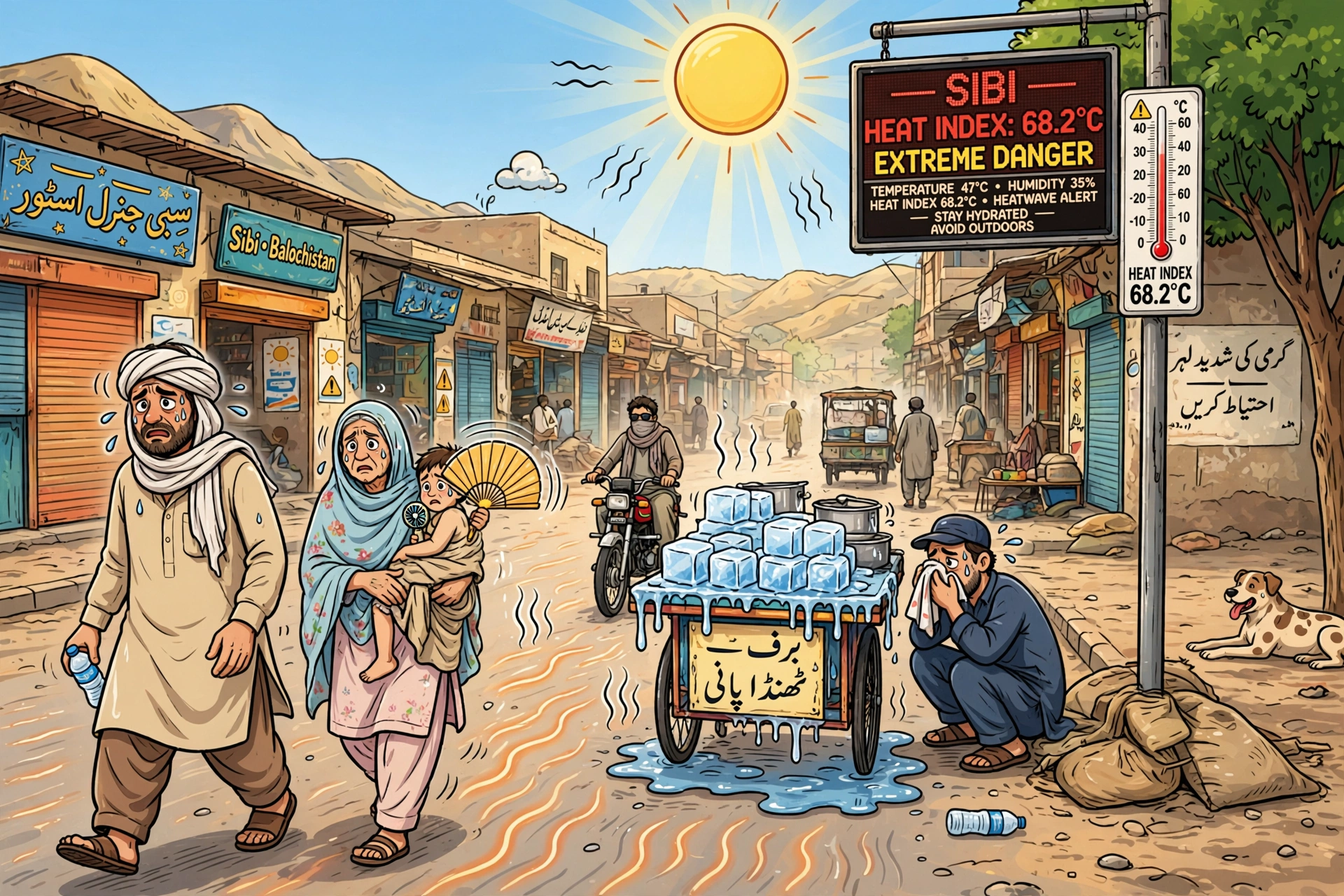
Pakistan is once again facing an intense spell of extreme heat, with Sibi recording a dangerous heat index of 68.2°C, one of the highest “feels-like” temperatures reported in the country this year. The alarming figure reflects the combined effect of high air temperatures and humidity, making conditions significantly more dangerous than the actual temperature.
According to weather officials, several other cities also experienced severe heat stress. Bahawalnagar recorded a heat index of 56.7°C, while Dera Ismail Khan and Dadu both reached 55.8°C. Sargodha, Hyderabad, Sukkur, Faisalabad, and Peshawar also reported dangerously high “feels-like” temperatures, placing millions of people at risk of heat-related illnesses.
The Pakistan Meteorological Department has urged citizens to take extra precautions during the ongoing heatwave. People have been advised to avoid unnecessary outdoor activities during the hottest hours of the day, remain well-hydrated, wear light-colored clothing, and seek shade or air-conditioned spaces whenever possible. Health experts warn that prolonged exposure to extreme heat can lead to dehydration, heat exhaustion, and potentially fatal heatstroke.
Children, elderly individuals, outdoor workers, and those with pre-existing medical conditions are considered especially vulnerable during such weather. Authorities have also encouraged employers to reduce outdoor work during peak afternoon hours and ensure workers have access to drinking water and rest breaks.
Meteorologists say the heat index, often referred to as the “feels-like” temperature, is a more accurate measure of how hot conditions are for the human body because it accounts for both temperature and humidity. With extreme weather events becoming more frequent, officials continue to urge the public to stay informed through weather advisories and follow safety guidelines until conditions improve.
