
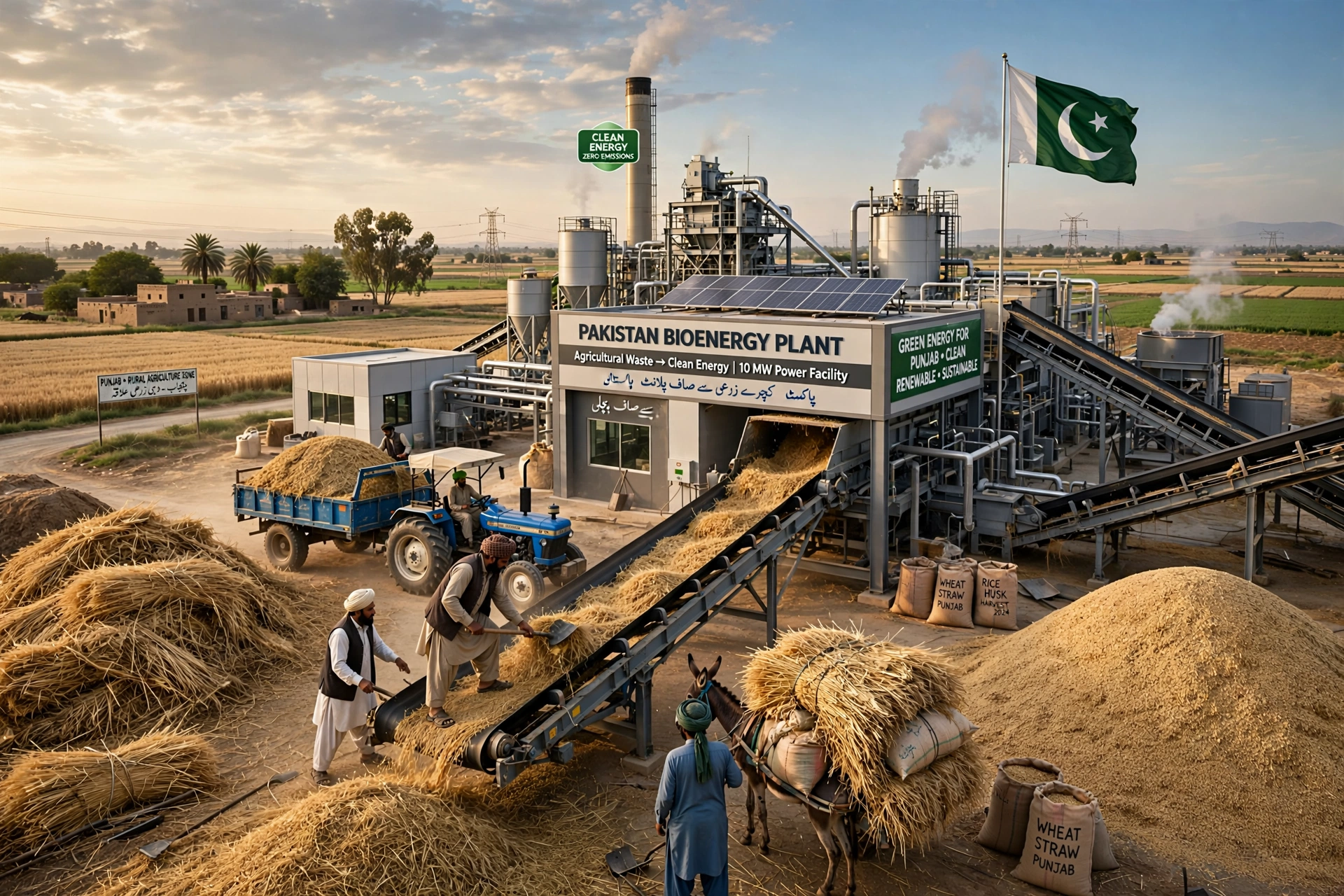
Pakistan is moving toward a new approach to agricultural waste management with the development of its first full-scale plant designed to convert crop residue into clean energy. The project is being led by Northumbria University with nearly £1.25 million in funding from the UK government.
Known as SAFER PLUS, the initiative will transform waste such as cotton stalks and sugarcane residue into engineered bio-coal pellets through a heating process called torrefaction. The resulting fuel could provide industries with a locally produced alternative to imported coal.
The project comes as Pakistan continues to face two connected challenges: the burning of agricultural residue and heavy dependence on imported coal. Millions of tonnes of crop waste are burned across Punjab each year, contributing to air pollution and seasonal smog. At the same time, Pakistan imports around 19 million tonnes of coal annually, costing more than $2.5 billion.
According to the project team, the bio-coal pellets could potentially replace imported coal in brick kilns and textile mill boilers while costing around 40% to 50% less. Three Pakistani textile manufacturers have already signed commitments to test the new fuel, creating an early pathway toward commercial use.
The project also has a strong rural development component. A women-led biomass cooperative will collect and supply agricultural waste to the facility. More than 120 households in the surrounding area are expected to earn formal income from material that farmers currently have to pay to remove. At least 60% of training opportunities will be reserved for women, with payments made directly through mobile wallets.
A demonstration hub at the University of Kamalia in South Punjab is expected to process around 5,000 tonnes of agricultural waste annually and produce up to 4,000 tonnes of bio-coal. The facility is planned to remain operational for at least 10 years after the project ends.
If successful, the model could eventually be replicated at multiple locations across Pakistan. The project team estimates that expansion to 30 sites could help replace more than 100,000 tonnes of imported coal each year.
The initiative therefore offers Pakistan an opportunity to turn an environmental problem into an economic resource—reducing crop-residue burning, creating rural employment and developing a domestic alternative to imported fossil fuels.
