
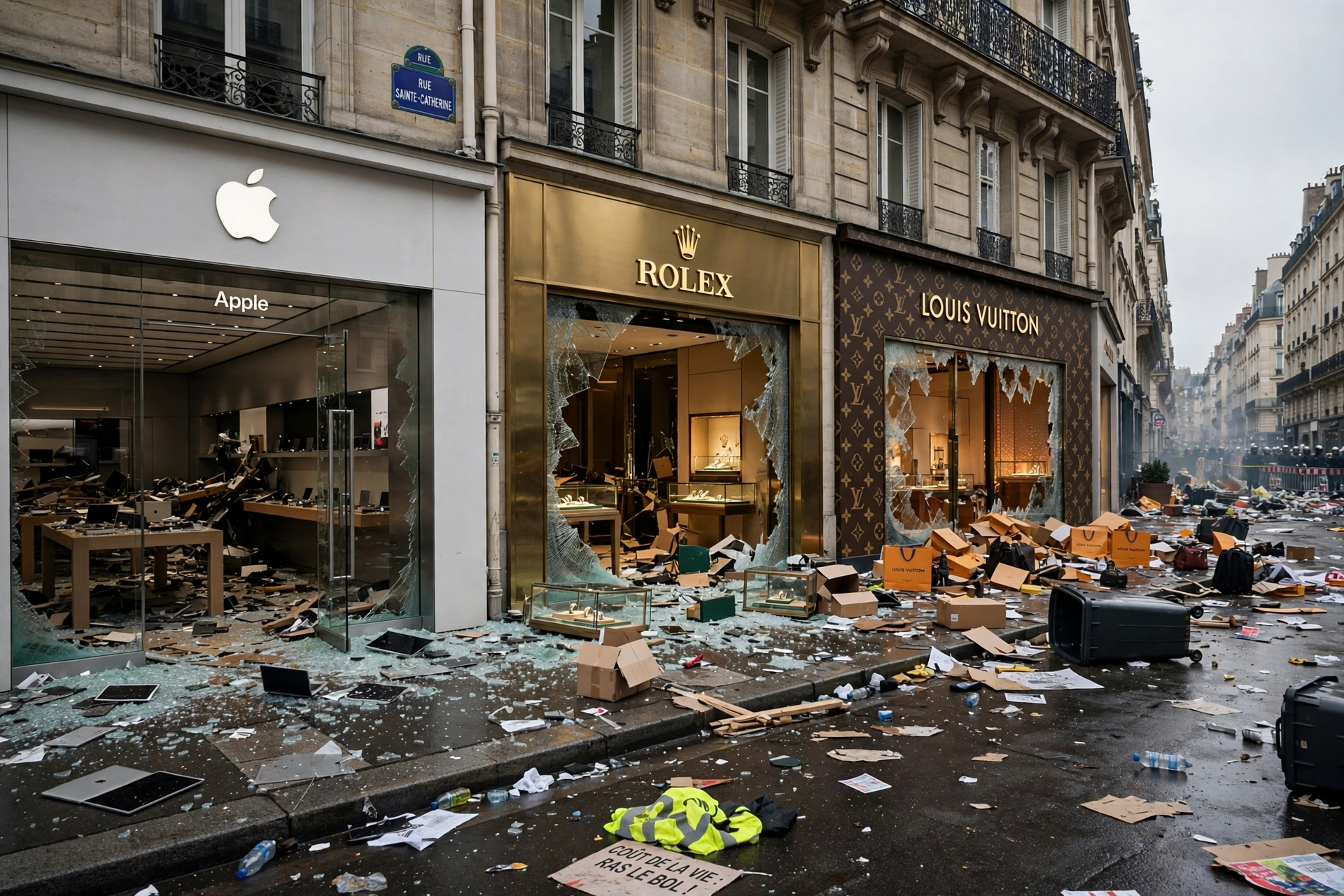
Stores belonging to Apple, Rolex and Louis Vuitton were among the businesses looted in France as nationwide protests against rising living costs escalated into violence, clashes and vandalism.
The unrest erupted on October 17, 2026, when hundreds of thousands of people took to the streets across the country to express their frustration over inflation, declining public services and concerns about school conditions. Although many demonstrations remained peaceful, some groups broke into shops, damaged public buildings and clashed with police.
In Bordeaux, looters targeted Apple and Louis Vuitton stores along the busy Rue Sainte-Catherine shopping street. An Apple Store in Lille was also looted, while a Rolex store and a Hermès boutique were among the businesses reportedly targeted in Marseille. Luxury shops in Paris also suffered damage during the unrest.
The violence extended beyond high-end retailers, with supermarkets, mobile phone shops and other businesses also affected. Public buildings were targeted in several cities, and a fire severely damaged the historic city hall in Limoges.
French authorities reported hundreds of arrests during the initial demonstrations. By Sunday, October 18, the number of arrests had risen to more than 2,400, according to Interior Minister Laurent Nuñez. Nearly 1,000 police officers were reported injured, while one protester died after suffering a cardiac arrest during the demonstrations.
President Emmanuel Macron condemned the violence and called for calm. He acknowledged that people protesting peacefully had legitimate concerns but said that looting and destruction could not be justified.
The unrest has raised concerns among businesses about financial losses, damaged property and disruptions to normal operations. The government has promised support for affected businesses and warned that those responsible for the destruction would face legal consequences.
The events highlight the growing tensions surrounding living costs and public services in France, while also renewing debate over how authorities should respond to widespread public dissatisfaction.
