
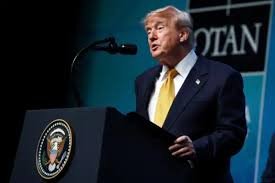
Former U.S. President Donald Trump has issued one of his strongest warnings yet toward Iran, saying that “thousands of missiles are locked and loaded” and aimed at the Islamic Republic, with “thousands more ready to immediately follow” if American interests are threatened. The remarks have attracted worldwide attention and sparked fresh debate over security and stability in the Middle East.
Trump’s statement was presented as a warning rather than an announcement of military action. He argued that any attack on the United States, its forces, or its allies would receive an overwhelming response. Although the comments were forceful, no official announcement of an immediate military operation accompanied the statement.
The relationship between the United States and Iran has remained tense for decades. Disagreements over Iran’s nuclear program, regional influence, sanctions, and the activities of armed groups backed by Tehran have repeatedly increased friction. Military incidents in the Gulf and attacks involving proxy groups have further complicated relations between the two countries.
Experts caution that strong public statements can have both positive and negative effects. Supporters believe such warnings may deter potential attacks by demonstrating military readiness. Critics, however, argue that highly aggressive rhetoric can raise tensions, increase the risk of miscalculation, and make diplomatic solutions more difficult.
For the international community, the priority remains preventing conflict. Many governments continue to encourage dialogue, negotiations, and diplomatic engagement to reduce the chances of military escalation. A direct confrontation between the United States and Iran could have significant consequences for regional security, global energy markets, and civilians across the Middle East.
The latest remarks highlight the fragile state of regional affairs. While political leaders often use strong language during periods of heightened tension, lasting peace ultimately depends on diplomacy, restraint, and efforts to resolve disputes through peaceful means rather than military confrontation.
