
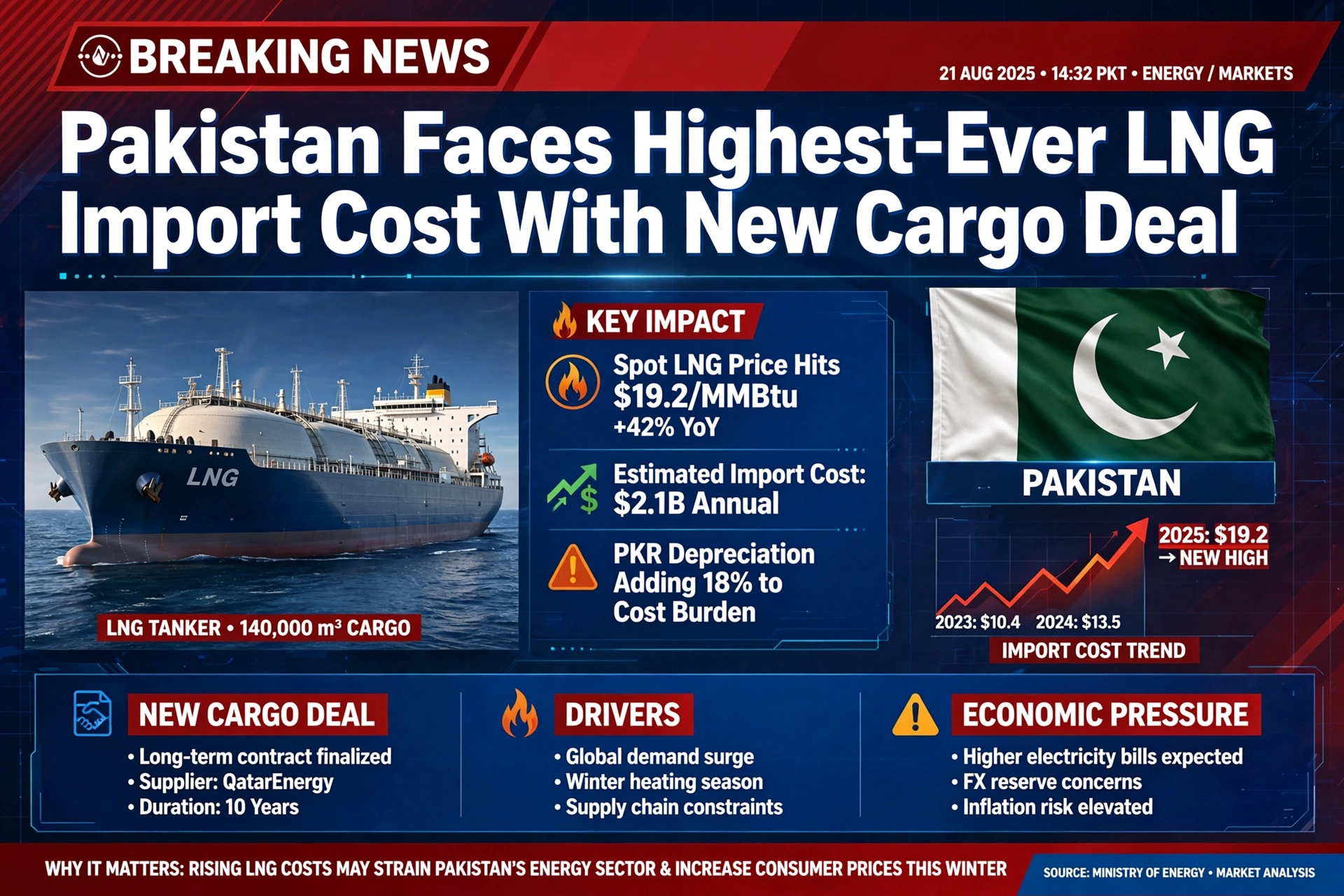
Pakistan is facing a fresh increase in energy costs as a new liquefied natural gas (LNG) cargo deal has reportedly pushed import costs to their highest-ever level. The development could add further pressure to the country’s energy sector and increase concerns over the rising cost of securing fuel supplies.
The latest LNG purchase is expected to place a significant financial burden on Pakistan, which relies on imported gas to meet domestic energy requirements. Higher LNG procurement costs can affect the country’s overall import bill and put additional pressure on foreign exchange reserves.
The development comes at a time when Pakistan is working to manage its energy needs, fuel costs, and economic pressures. Expensive LNG imports can also have wider implications for the power sector, particularly when imported gas is used for electricity generation.
Higher procurement costs may eventually influence electricity generation expenses and consumer energy prices, depending on how the additional costs are managed by the government and relevant energy authorities.
The new deal highlights the challenges Pakistan faces in securing affordable energy supplies amid fluctuations in global LNG prices, international energy markets, and geopolitical developments.
Energy experts have frequently stressed the importance of improving domestic gas production, expanding renewable energy, and strengthening long-term energy planning to reduce dependence on costly imports.
The latest LNG deal is therefore expected to attract close attention from policymakers, businesses, and consumers. Any sustained rise in LNG import costs could increase pressure on Pakistan’s energy system and economy, making affordable and reliable energy supplies an increasingly important priority for the country.
