
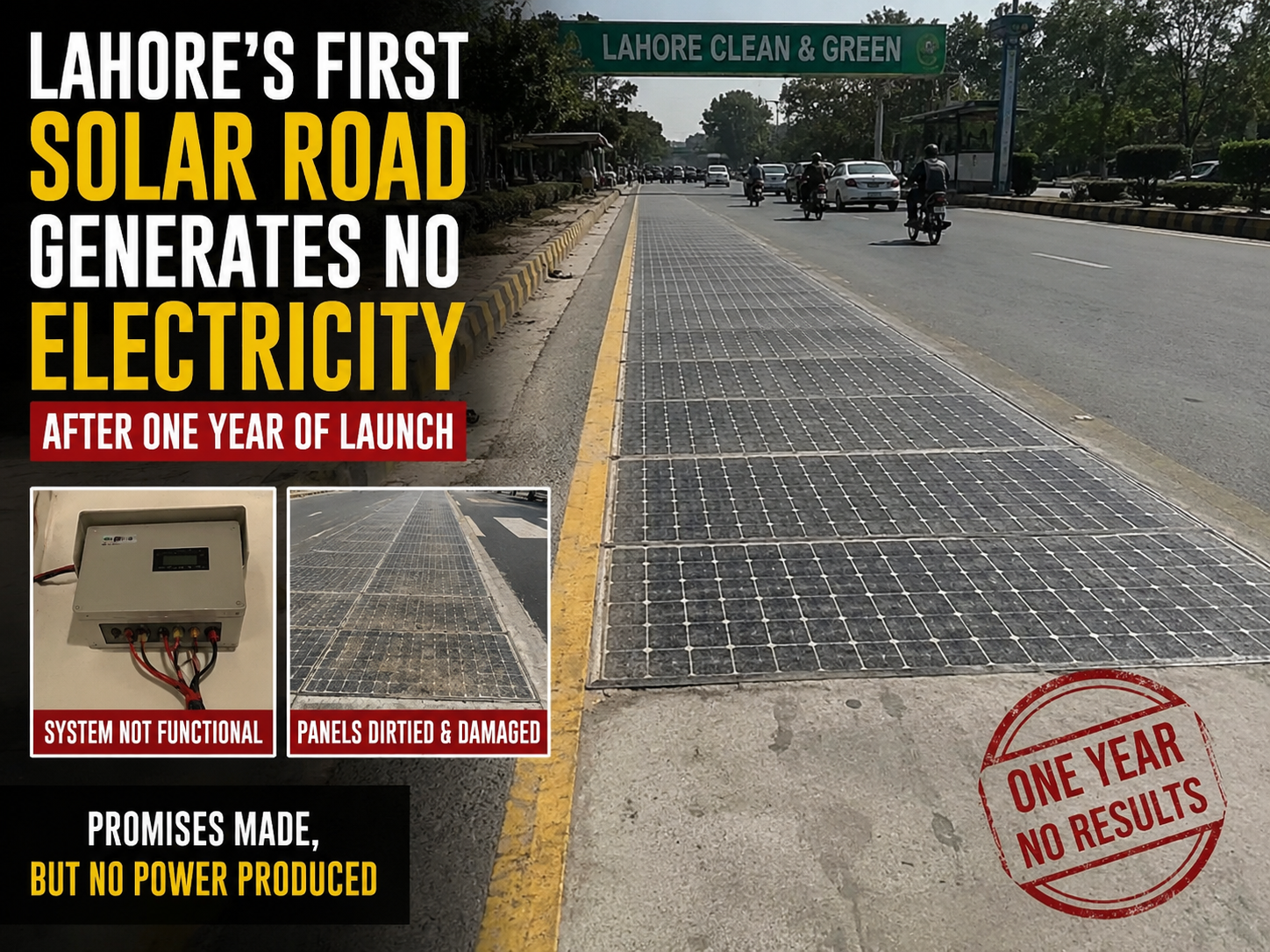
Lahore’s much-publicized first solar road project has reportedly come under scrutiny after claims that the installation is no longer generating electricity nearly one year after its launch. The project was introduced as an innovative step toward using renewable energy and reducing pressure on the city’s power system.
The solar road was presented as a modern initiative that could combine transport infrastructure with clean energy production. Solar panels installed along the road were expected to capture sunlight and convert it into electricity, supporting the growing demand for alternative energy sources.
However, reports about the project’s current performance have raised questions about its maintenance, efficiency and long-term sustainability. Critics argue that renewable energy projects require regular monitoring and proper maintenance to ensure that equipment continues to operate effectively.
The development has also sparked a wider discussion about the challenges of introducing new solar technologies in Pakistan. While the country receives plenty of sunlight, factors such as dust, extreme weather, technical faults and inadequate maintenance can affect the performance of solar installations.
Supporters of solar energy believe such projects can still play an important role in Pakistan’s transition toward cleaner and more affordable power. They say the experience gained from pilot projects can help authorities improve future renewable energy initiatives.
The reported situation has also raised concerns about the need for greater transparency and performance monitoring in publicly announced infrastructure projects. Experts say authorities should regularly publish data showing how much electricity such projects generate and whether they are meeting their original targets.
As Pakistan continues to explore renewable energy solutions, the Lahore solar road project could serve as an important lesson in the importance of proper planning, quality technology and long-term maintenance. Further official information is needed to confirm the project’s current operational status and electricity output.
