
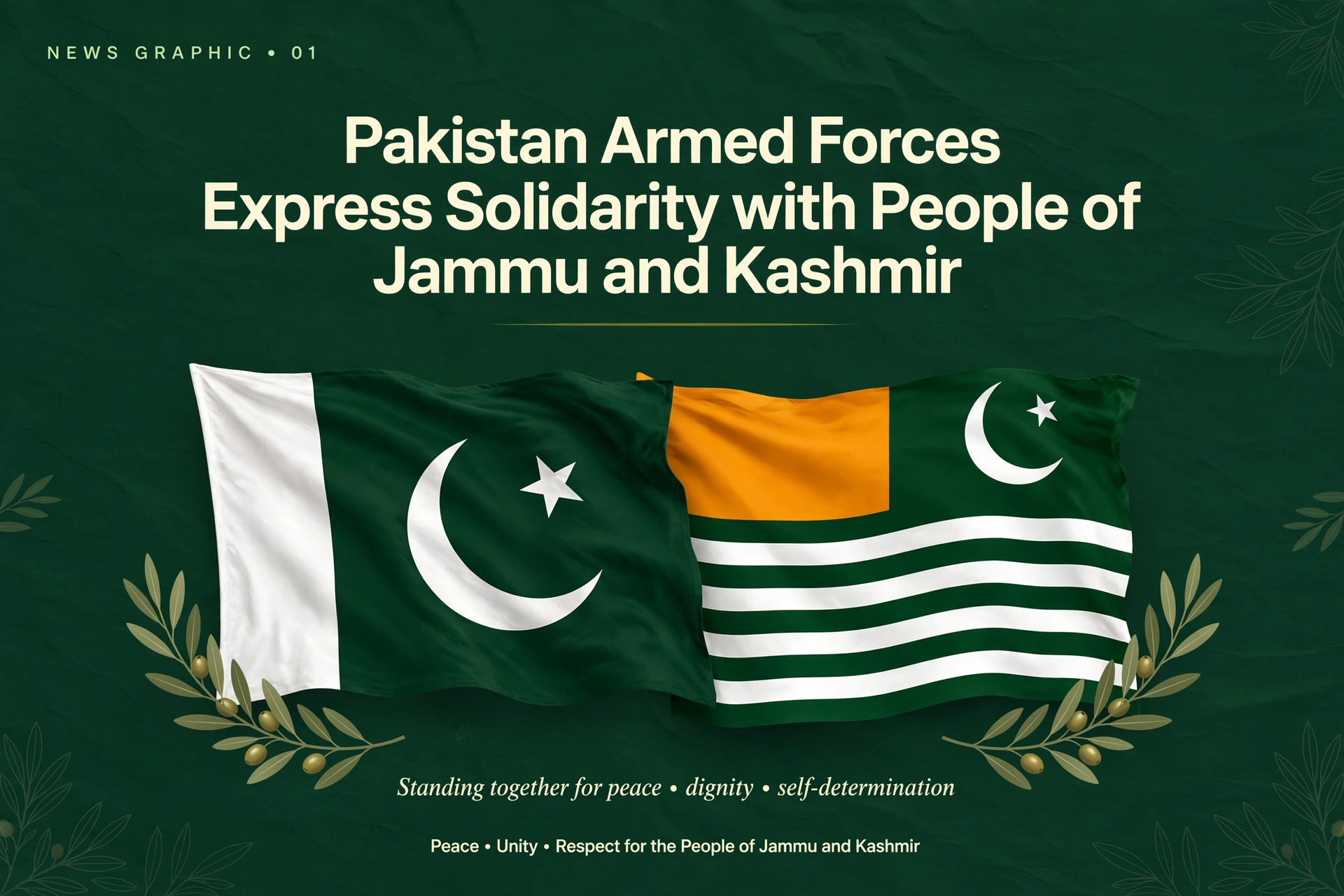
Pakistan’s armed forces have reaffirmed their unwavering solidarity with the people of Jammu and Kashmir, reiterating support for their right to self-determination.
The statement was issued on the occasion of Youm-e-Istehsal Kashmir, observed on August 5 to mark Pakistan’s opposition to India’s 2019 constitutional changes concerning Jammu and Kashmir. According to the Inter-Services Public Relations (ISPR), Chief of Army Staff Field Marshal Syed Asim Munir, Chairman Joint Chiefs of Staff Committee, Chief of Naval Staff, Chief of Air Staff and the Pakistan Armed Forces expressed solidarity with the people of Indian-administered Jammu and Kashmir.
The armed forces said they support what they describe as the Kashmiri people’s legitimate struggle for their right to self-determination, referring to relevant United Nations Security Council resolutions and international law.
The military leadership also paid tribute to those who have lost their lives in the Kashmir conflict and reiterated its commitment to standing with Kashmiris. ISPR said that a lasting peace in South Asia would remain difficult to achieve without a peaceful resolution of the Jammu and Kashmir dispute.
The statement comes amid renewed attention to Kashmir as Pakistan marks another anniversary of the August 5, 2019 developments. Pakistan’s civilian leadership has similarly reiterated political, diplomatic and moral support for Kashmiris and called for a resolution consistent with the aspirations of the Kashmiri people.
The armed forces’ message underscores Pakistan’s continued position on the Kashmir dispute, with Islamabad maintaining that the issue should be resolved peacefully in accordance with relevant UN resolutions and the wishes of the Kashmiri people.
The development also highlights the enduring importance of the Kashmir issue in Pakistan’s foreign-policy and national-security discourse.
