
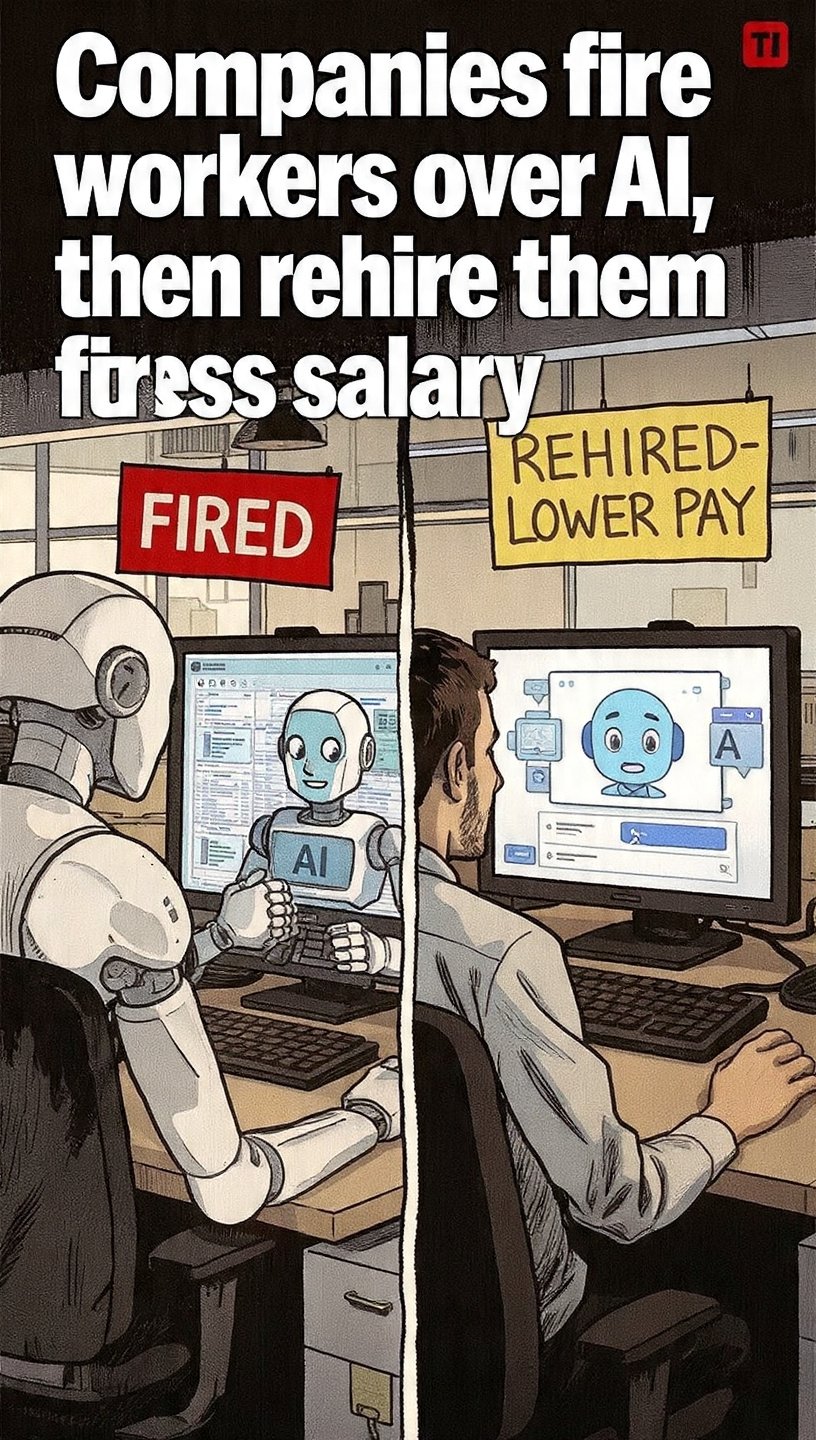
Companies are increasingly turning to artificial intelligence to reduce costs and change the way work is done. In some cases, this shift is creating an unusual trend: workers are being laid off after their jobs are affected by AI, only to be hired again later for similar work at lower salaries.
As businesses introduce AI tools for customer service, data analysis, content creation, software development and administrative tasks, some positions are being reduced or eliminated. Companies often describe these changes as part of efforts to improve efficiency and remain competitive.
However, the story does not always end with layoffs. Some employers later discover that they still need human workers to check AI-generated work, manage automated systems, handle complicated customer issues or perform tasks that AI cannot complete reliably. Instead of bringing back the same employees on their previous salaries, companies may advertise new positions with lower pay or different job titles.
For workers, this can create a difficult situation. They may have to accept reduced salaries simply to return to a job they previously performed. Others may decide to look for new careers or develop AI-related skills to remain competitive.
The trend also highlights an important change in the workplace. AI is not necessarily replacing every worker completely. In many cases, it is changing the type of work companies expect people to do.
Experts have increasingly encouraged employees to learn how to work alongside AI rather than compete directly with it. Skills such as problem-solving, communication, creativity, decision-making and AI tool management could become more valuable as businesses continue automating routine tasks.
For companies, replacing workers with AI may reduce costs in the short term, but losing experienced employees can also create problems. Businesses may eventually need those workers again because human judgment and expertise remain important.
The growing debate is therefore not simply about whether AI will take jobs. It is also about what those jobs will look like, how much they will pay and who will benefit from the productivity gains created by AI.
