
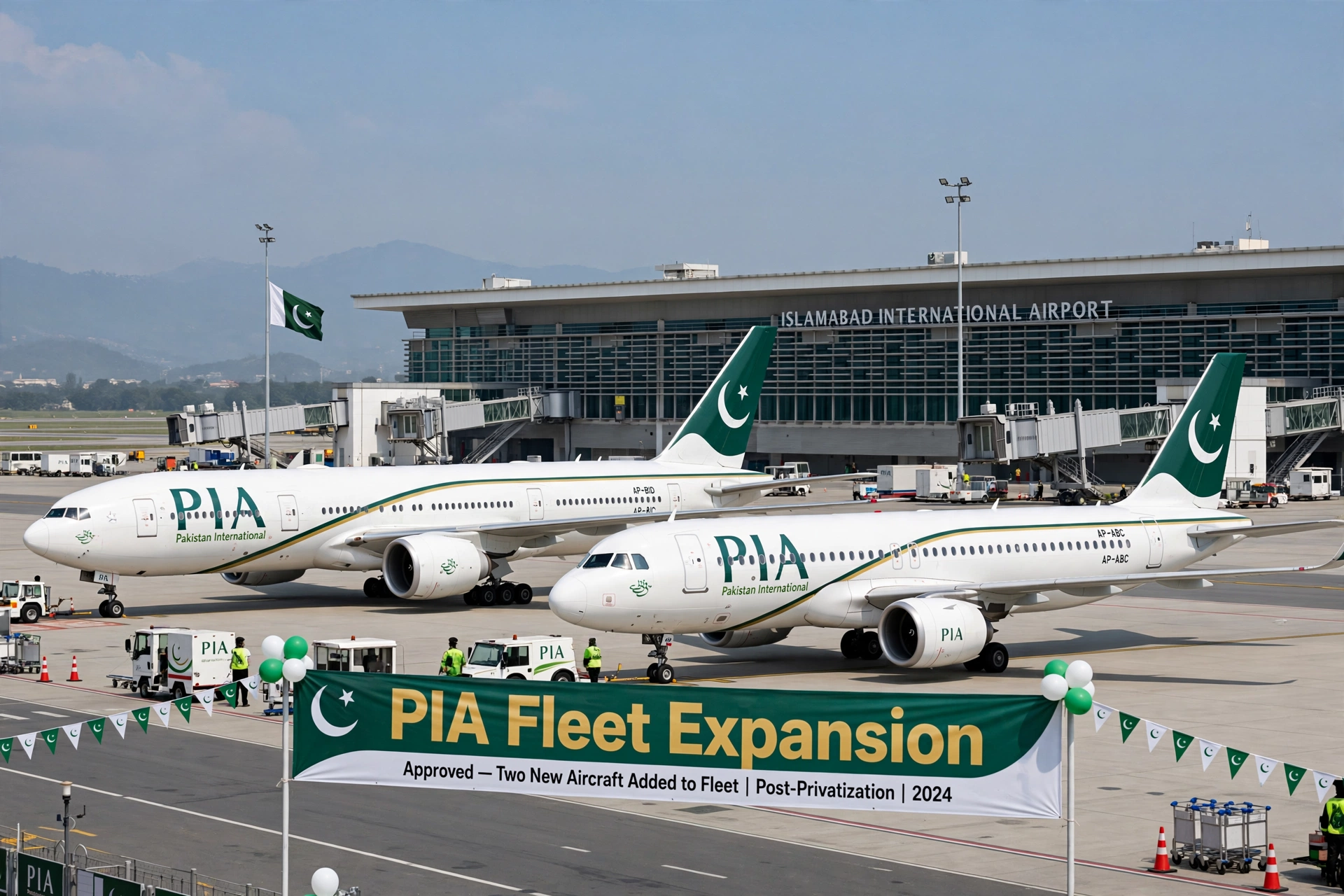
Pakistan International Airlines (PIA) is set to expand its fleet by adding two aircraft under a wet-lease arrangement, marking an early step toward increasing its operational capacity following privatization.
The PIA Board of Directors has approved the induction of two aircraft on wet lease, with both planes expected to join the airline’s fleet in October 2026. The aircraft will primarily be used for European operations, helping PIA increase capacity on international routes and strengthen its connectivity.
Under the arrangement, the aircraft will initially be leased for six months. The leasing company will provide the aircraft along with pilots and cabin crew, allowing PIA to increase its available fleet without immediately having to recruit additional flight and cabin personnel.
The addition is expected to provide PIA with greater operational flexibility and potentially increase revenue by allowing the airline to operate additional flights and improve frequencies on key international routes. The move comes as the carrier’s new private-sector management works to improve its operations and rebuild the airline following the privatization process.
The two wet-leased aircraft are separate from PIA’s longer-term plan to acquire 16 aircraft from Boeing. Pakistani officials have held discussions with the US-based aircraft manufacturer regarding the proposed acquisition as part of the airline’s wider fleet expansion strategy.
Reports have also indicated that PIA’s management wants to accelerate deliveries of the planned Boeing aircraft, with the first aircraft potentially arriving in 2027. The longer-term expansion is intended to significantly increase PIA’s fleet and support the development of both domestic and international routes.
The immediate addition of two aircraft could therefore provide a short-term boost while PIA works toward its broader fleet modernization goals.
If implemented successfully, the expansion could help the national carrier increase flight frequencies, improve passenger connectivity and strengthen its financial performance. The move also signals that fleet expansion is becoming a key priority under PIA’s new private-sector management.
