
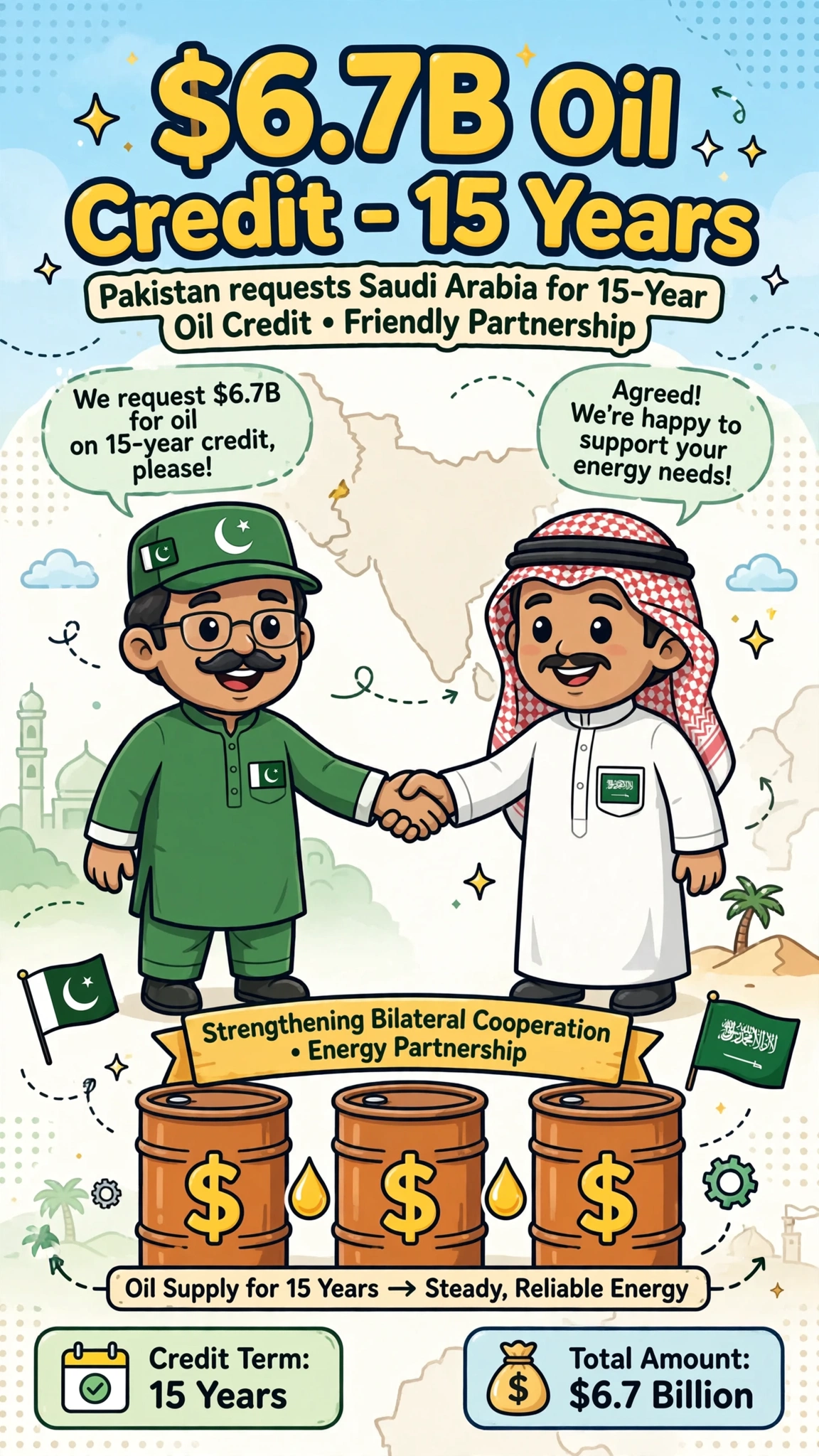
Pakistan has reportedly requested Saudi Arabia to provide oil worth $6.7 billion on deferred payment terms for a period of 15 years, in a move aimed at easing pressure on the country’s foreign exchange reserves and strengthening its energy security.
The proposal would allow Pakistan to import petroleum products and crude oil from Saudi Arabia while making payments over an extended period. Such an arrangement could help reduce the immediate burden on Pakistan’s foreign exchange resources and support the country in managing its external financing requirements.
Pakistan relies heavily on imported fuel to meet domestic energy demand. The cost of these imports places significant pressure on the country’s foreign exchange reserves, particularly when international oil prices rise. A long-term credit arrangement with Saudi Arabia could provide greater financial flexibility and help ensure a steady supply of petroleum products.
The request also highlights the close economic relationship between Pakistan and Saudi Arabia. The two countries have maintained strong diplomatic and economic ties, with cooperation covering energy, investment, trade, and financial support.
If approved, the proposed $6.7 billion oil facility could provide Pakistan with important financial relief. It may also help the country manage its balance-of-payments pressures and reduce the need for immediate dollar payments for energy imports.
However, the final terms of the proposed arrangement, including the interest rate, repayment schedule, and exact volume of oil supplies, would depend on negotiations between the two governments.
The development comes as Pakistan continues efforts to strengthen its external financing position and secure affordable energy supplies. Any agreement with Saudi Arabia could play an important role in supporting Pakistan’s energy needs and improving economic stability over the long term.
