
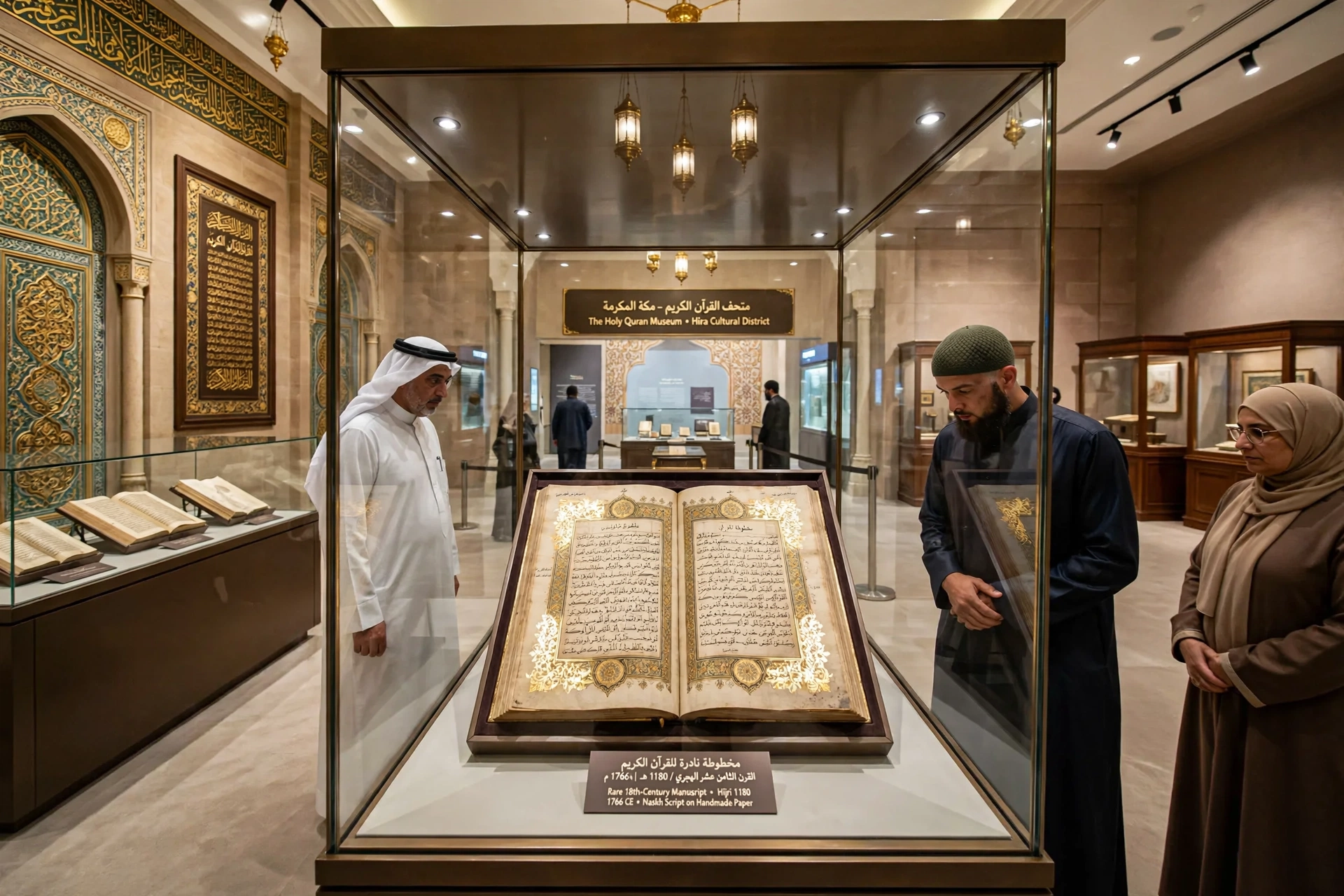
A rare 18th-century Quranic manuscript is currently being showcased at the Holy Quran Museum in Makkah, giving visitors an opportunity to explore the rich history of handwritten Qurans and traditional Arabic calligraphy.
The manuscript is being displayed at the Hira Cultural District, where visitors can observe the detailed craftsmanship and artistic techniques used by manuscript creators centuries ago.
Written primarily in black ink, the historic Quran features carefully placed diacritical marks that demonstrate the precision involved in preserving and presenting the Arabic text. Its pages are also decorated with delicate floral motifs, adding an artistic dimension to the religious manuscript.
The distinctive calligraphic styles visible throughout the manuscript reflect the artistic traditions of the period in which it was produced. The combination of precise writing, decorative elements and careful manuscript design provides insight into how Quranic texts were copied and preserved before modern printing technologies became widespread.
The exhibition offers visitors more than a view of an ancient manuscript. It provides a window into the development of Arabic calligraphy, handwritten Quran production and traditional manuscript decoration, while highlighting the skills of craftsmen from earlier generations.
Such historical manuscripts are valuable cultural and educational resources, allowing researchers and visitors to better understand the evolution of Islamic written heritage.
The display at the Hira Cultural District adds another cultural attraction for visitors to Makkah, connecting the city’s religious significance with its rich history of scholarship, calligraphy and manuscript preservation.
