
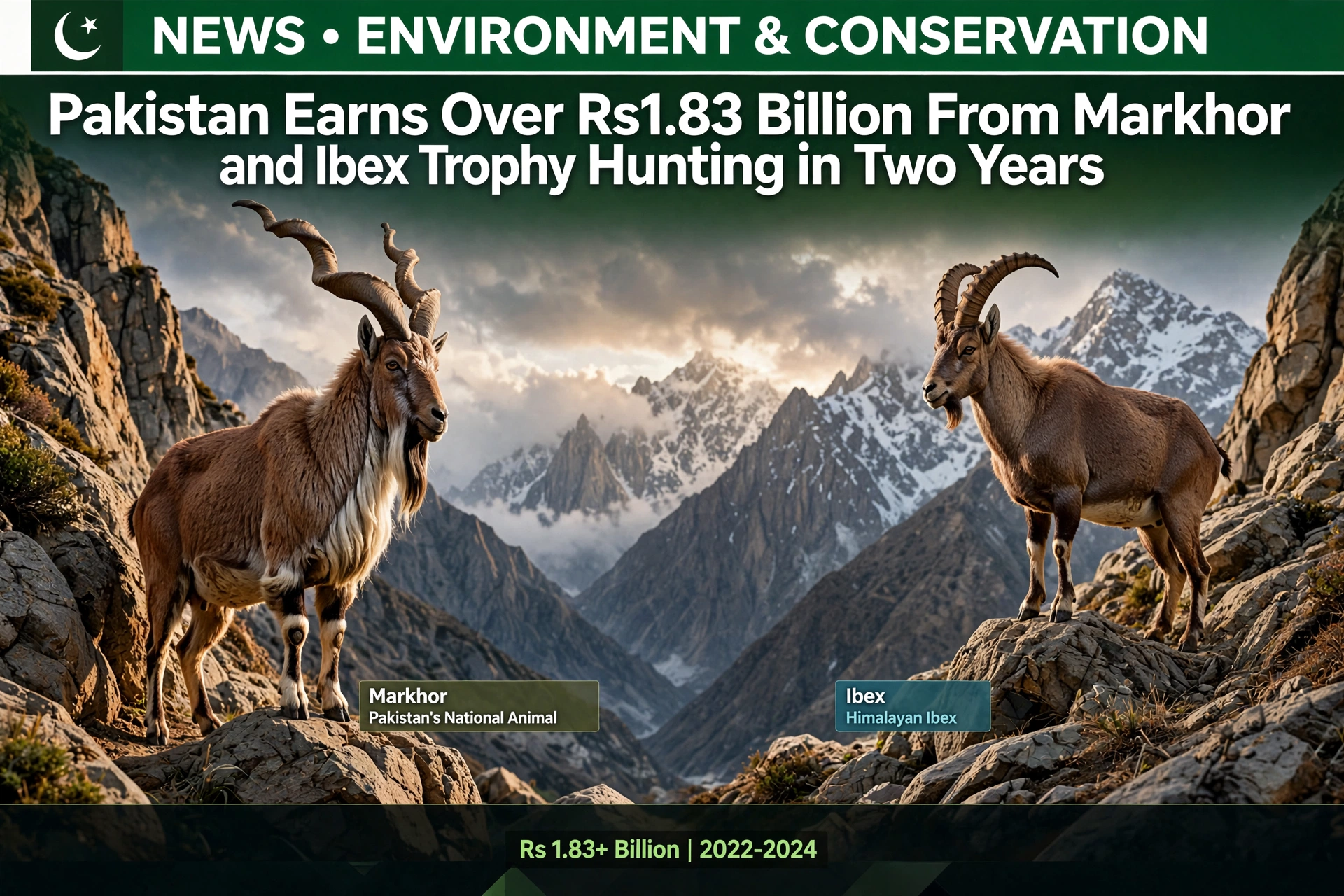
Pakistan generated more than Rs1.83 billion from Markhor and Ibex trophy hunting between 2023 and 2025, according to figures presented by the Ministry of Climate Change in the Senate.
The revenue was generated through regulated trophy-hunting permits for the country’s mountain wildlife. The programme is designed not only to generate income but also to support wildlife conservation and local communities.
Balochistan recorded the highest revenue during the period, generating around Rs760 million from Markhor and Ibex trophy hunting.
Gilgit-Baltistan ranked second with more than Rs620 million, while Khyber Pakhtunkhwa generated approximately Rs447.8 million. Sindh recorded around Rs3.1 million.
Pakistan’s trophy-hunting system operates under controlled permits and is linked to community-based conservation. In Gilgit-Baltistan, for example, hunting permits for Markhor and Ibex are offered through open bidding, with local communities receiving a major share of the revenue.
Under the current revenue-sharing model, 80% of hunting revenue goes to local communities, while the remaining 20% is allocated to provincial wildlife departments.
The money can help communities improve local livelihoods while providing an economic incentive to protect wildlife and discourage illegal hunting.
Trophy-hunting permits can attract very high bids because of the rarity of species such as the Markhor. In Gilgit-Baltistan, Markhor permits have previously been sold for hundreds of thousands of US dollars, while Himalayan Ibex permits have had base rates in the thousands of dollars.
Authorities and conservation organisations argue that regulated hunting of selected animals can generate funds for protecting wider populations and their habitats.
Pakistan’s experience has made community-based trophy hunting an important part of its wildlife-conservation strategy, although the practice remains controversial among animal-rights and conservation advocates.
The latest revenue figures highlight how Pakistan is using its valuable mountain wildlife to generate economic benefits while attempting to strengthen conservation and provide financial support to communities living close to wildlife habitats.
