
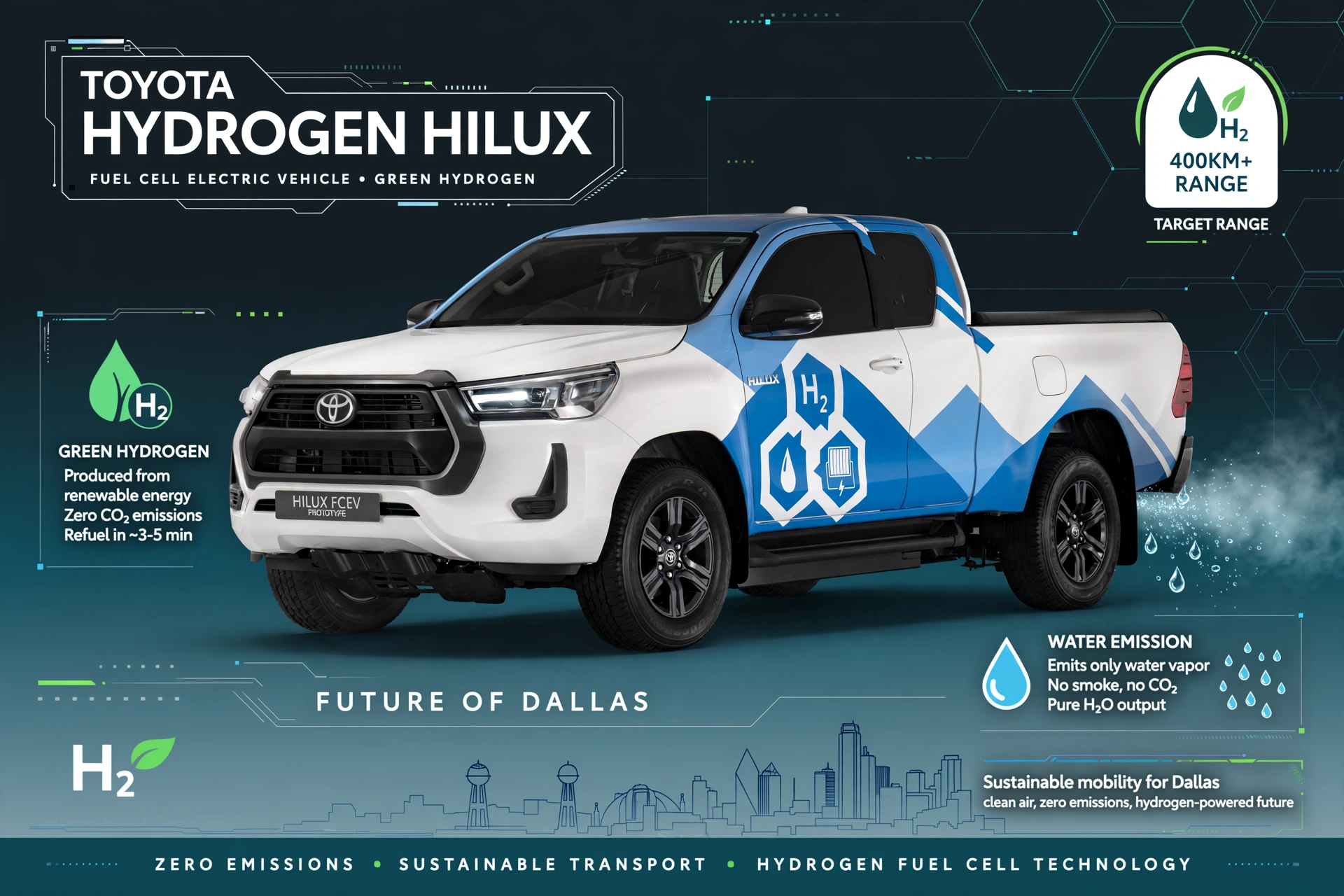
Toyota is moving towards cleaner transport with plans to introduce a hydrogen fuel cell version of its popular Hilux pickup truck, targeting a driving range of more than 400 kilometres and producing water instead of harmful tailpipe emissions.
According to Toyota Motor Europe, the hydrogen-powered Hilux is scheduled for launch in 2028. The company is also planning to enter a fuel cell Hilux in the Dakar Rally’s Future Mission 1000 category in 2027 to test the technology under demanding conditions.
Unlike conventional diesel vehicles, the hydrogen fuel cell Hilux will use hydrogen to generate electricity, which powers an electric motor. During this process, the vehicle produces water as its main tailpipe emission instead of exhaust gases from burning diesel.
Toyota aims to combine the environmental advantages of electric propulsion with the durability and practical capabilities associated with the Hilux. The company has stated that the upcoming model is expected to offer a driving range exceeding 400 kilometres and towing capacity of up to 2.5 tonnes.
The new model is part of Toyota’s broader strategy to develop different powertrain technologies, including hybrid, battery-electric and hydrogen fuel cell vehicles. The company believes hydrogen could be particularly useful for vehicles that require longer driving ranges, heavy loads and quick refuelling.
However, hydrogen vehicles still face challenges, including limited refuelling infrastructure and the cost of producing and distributing hydrogen fuel. Their overall environmental impact also depends on how the hydrogen is produced.
Toyota’s planned hydrogen Hilux represents another step towards alternative fuel technologies. If successfully commercialised, it could offer businesses and drivers another option for reducing vehicle emissions without giving up the utility of a traditional pickup truck.
