
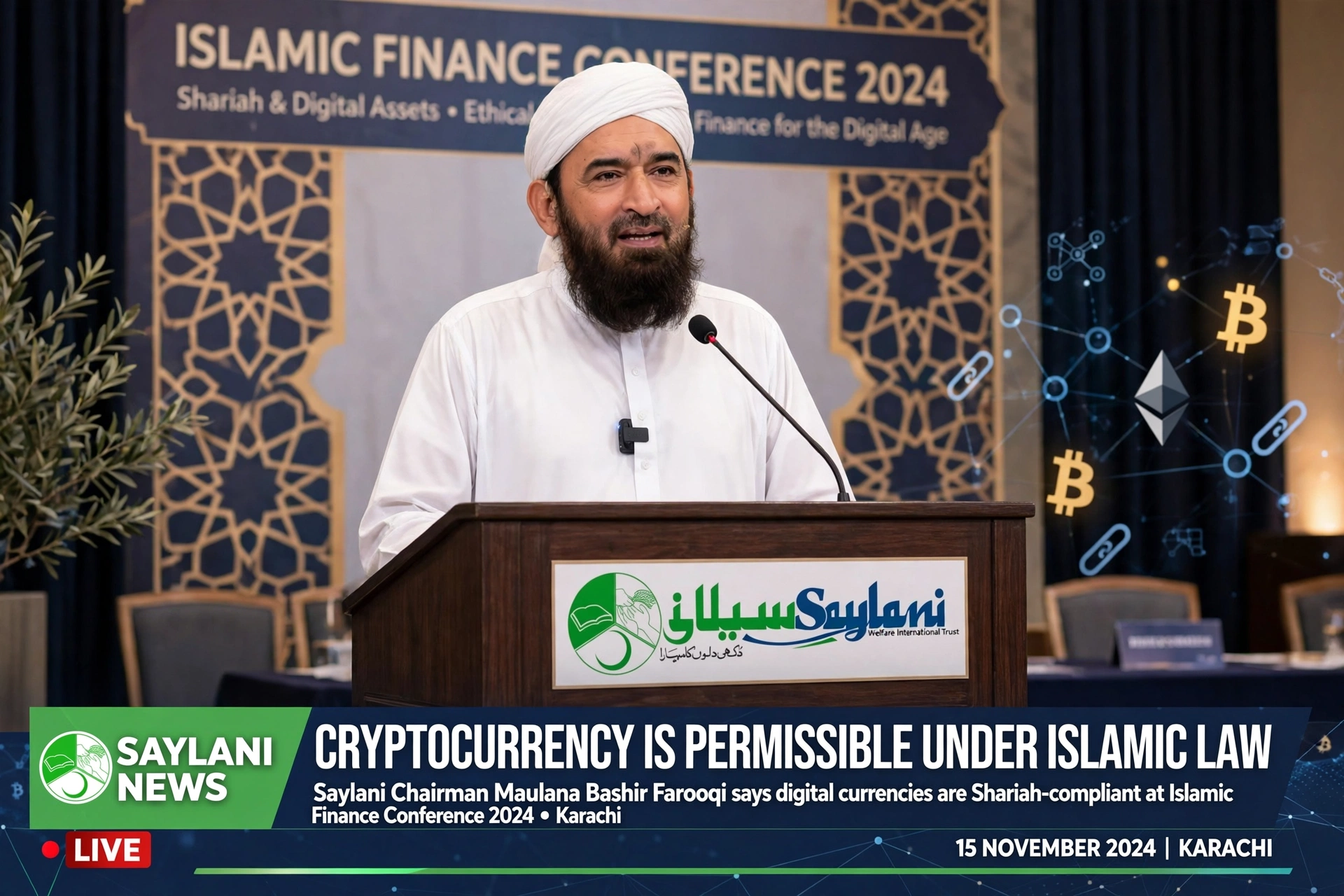
Chairman of the Saylani Welfare International Trust, Maulana Bashir Farooqui, has said that cryptocurrency is permissible under Islamic law if it is used in a lawful, transparent, and ethical manner. His remarks have sparked fresh discussion about the use of digital currencies among Muslims.
According to Maulana Bashir Farooqui, cryptocurrency itself is not inherently forbidden (haram). He explained that the ruling depends on how the digital asset is acquired, traded, and used. If transactions are free from fraud, deception, gambling, and other prohibited activities, they may be considered permissible under Islamic principles.
He stressed the importance of responsible investing. Investors should understand the risks involved, avoid speculation driven by greed, and ensure that their financial activities follow Islamic values. He also encouraged people to seek proper knowledge before investing in digital assets.
The statement comes at a time when interest in cryptocurrencies is growing in Pakistan and around the world. Many individuals are exploring digital currencies as an investment option, while governments and regulators continue to develop policies for the sector.
Islamic scholars have expressed different opinions on cryptocurrency. Some consider it permissible under certain conditions, while others remain cautious because of price volatility and regulatory concerns. As a result, Muslims are often advised to consult qualified scholars and financial experts before making investment decisions.
Maulana Bashir Farooqui’s remarks have added a new voice to the ongoing debate over cryptocurrency in the Islamic world. As digital finance continues to evolve, discussions about its compatibility with Islamic teachings are expected to continue.
With cryptocurrency becoming more widely used, clear regulations, financial awareness, and ethical investment practices will play an important role in helping people make informed decisions while staying within the principles of Islamic law.
