
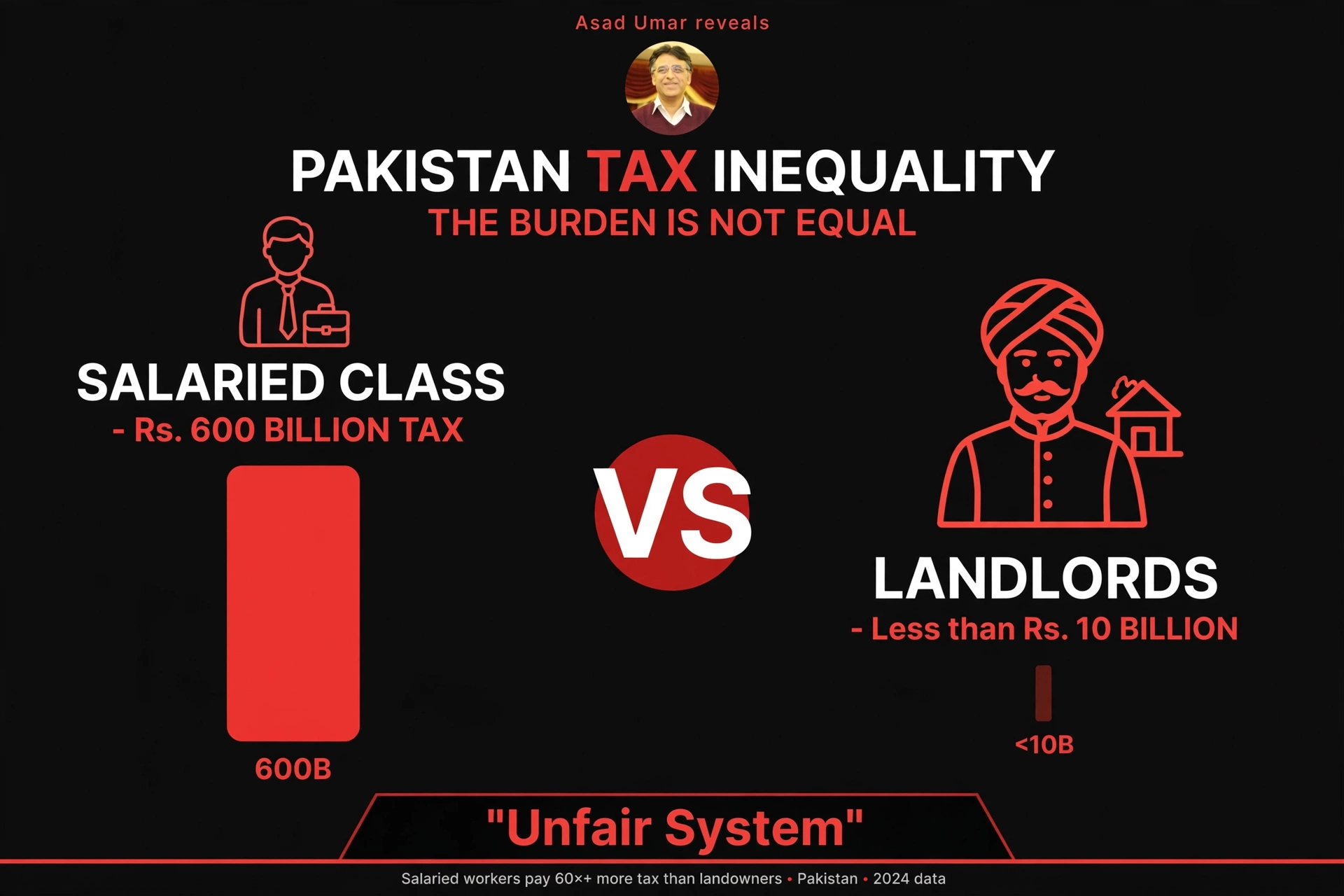
Former finance minister Asad Umar has raised concerns over what he described as a major imbalance in Pakistan’s tax system, saying the salaried class contributed more than Rs600 billion in taxes last year while landlords and wealthy landowners paid less than Rs10 billion.
Speaking to a private television channel, Umar said the figures showed an unfair distribution of the tax burden. He argued that salaried workers, whose taxes are generally deducted directly from their income, are carrying a significant share of the country’s tax collection.
Umar claimed that more than Rs600 billion was collected from salaried individuals, while less than Rs10 billion was collected from landlords, feudal families and wealthy landowners across the four provinces.
He said this difference was contributing to public frustration and called for a tax system in which different groups contribute more fairly according to their ability to pay.
Umar also criticised the government’s broader economic policies, including taxation on petroleum products. He claimed that the petroleum levy on petrol had increased from Rs50 to Rs117 per litre, with around Rs1.6 trillion collected through the levy during the previous year.
The former finance minister further argued that Pakistan needs reforms that broaden the tax base instead of placing a heavier burden on people whose incomes are already documented.
His comments have renewed discussion about tax collection from agriculture, property and wealthy landowners, and whether the country’s tax system distributes the burden fairly among different sections of society.
The figures regarding the Rs600 billion and Rs10 billion contributions are claims made by Asad Umar in his remarks.
