
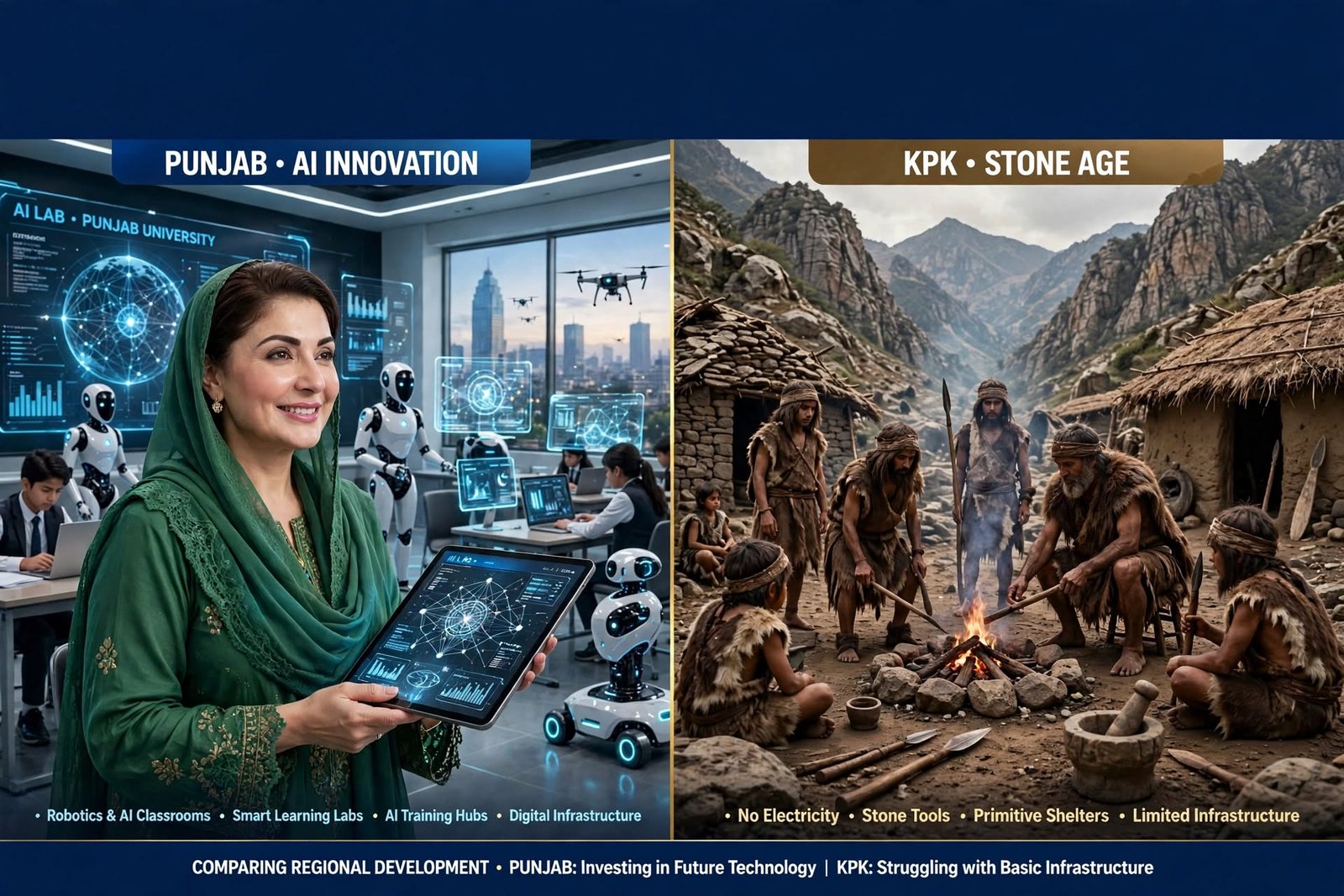
Punjab Chief Minister Maryam Nawaz has criticised the Pakistan Tehreek-e-Insaf (PTI)-led government in Khyber Pakhtunkhwa, saying Punjab is entering the era of artificial intelligence (AI) while KPK remains in the “Stone Age.”
She made the remarks on October 16, 2026, while addressing a laptop and scholarship distribution ceremony in Sahiwal. During her speech, she highlighted Punjab’s technology initiatives and education programmes while questioning the development priorities of the provincial government in Khyber Pakhtunkhwa.
Maryam Nawaz said her government was establishing AI laboratories in educational institutions to help students gain access to modern technology and develop skills for future employment. She also highlighted laptop distribution, scholarships and technical training programmes aimed at supporting young people.
The chief minister further announced plans to expand electric bus services across Punjab, with fares remaining at Rs20. She said the government intended to introduce electric buses in every tehsil and make public transport more accessible.
Speaking about education, Maryam claimed that university vice-chancellor appointments had been made on merit and stressed that deserving students should receive opportunities without political recommendations or favouritism.
She also criticised PTI over its political protests and handling of provincial affairs, alleging that political activities had diverted attention from public welfare and development.
Her comments come amid continuing political tensions between the ruling parties in Punjab and PTI, which governs Khyber Pakhtunkhwa.
The remarks have placed education, technology and provincial development at the centre of the latest political debate. While Punjab’s government highlights its technology and transport initiatives, assessing progress across provinces requires examining measurable outcomes in education, employment, public services and infrastructure.
